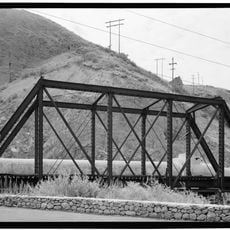
Olmsted Station Powerhouse, commercieel gebouw in Utah, Verenigde Staten van Amerika
Olmsted Station Powerhouse is a brick hydroelectric plant built in 1904 in Orem, Utah, by L. L. Nunn and his brother P. N. Nunn. The main building retains original equipment including three General Electric 2,300-volt generators, three Lombard governors, nine transformers, and a water-driven exciter with a Pelton wheel. Extensions in 1917 and 1948 added capacity.
L. L. Nunn and his brother P. N. Nunn built the powerhouse in 1904, funding George Westinghouse with a pouch of gold worth $50,000 to develop water-powered generators, transformers and switches. It was named for Fay Devaux Olmsted, who helped design the plant but died of tuberculosis before it was completed. The plant was decommissioned on September 21, 2015, and is to become a museum after a seismic refit.
The plant is named for Fay Devaux Olmsted, who helped the Nunn brothers design it but died of tuberculosis before it was finished. The Nunn brothers also founded the Telluride Institute on the site, the first corporate-sponsored electrical school in the U.S., which enrolled about forty students and operated until 1912.
The plant stands off U.S. Highway 189 in Orem, near the Provo city line. It was decommissioned on September 21, 2015, and a seismic refit is planned before it opens as a museum, so the building is not yet open to the public. The listing covers two contributing buildings on 5.2 acres (2.1 ha).
The Nunn brothers paid George Westinghouse with a pouch of gold worth $50,000 to develop the transformers, switches and water-powered generators the plant needed. The station is named for Fay Devaux Olmsted, who helped design it but died of tuberculosis before it was finished.
The community of curious travelers
AroundUs brings together thousands of curated places, local tips, and hidden gems, enriched daily by 94,587 contributors worldwide.