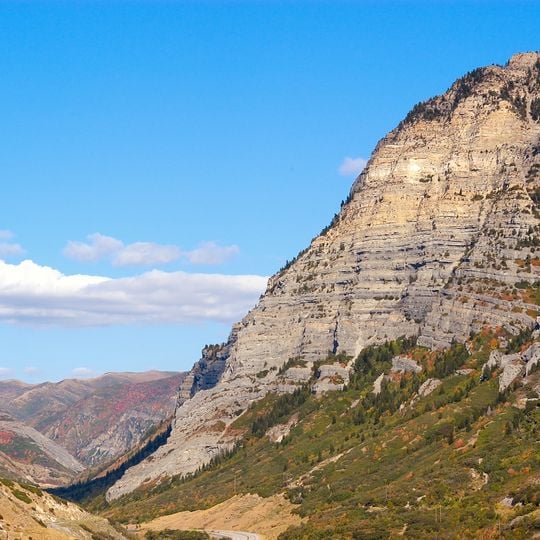
Provo Canyon, Canyon system in Utah and Wasatch Counties, United States.
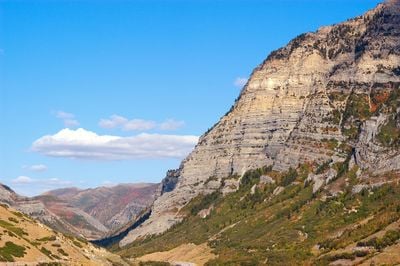
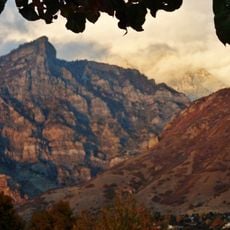
Provo Canyon is a 26-kilometre canyon between Mount Timpanogos to the north and Mount Cascade to the south, running from Orem to Heber City. The Provo River, which carved it, flows through, and its slopes show layered grey and tan rock with trees and shrubs on the ledges.
In 1852 explorer William Gardner first proposed a road through Provo Canyon, but only an old Indian trail on the north side existed until 1858. The Utah Legislature granted William Wall, Evan M. Green, Thomas S. Williams and Aaron Johnson the right to build a toll road in 1855; work halted in 1857 during the Utah War and the road reached Kamas Prairie by July 1858. The canyon also linked the Timpanogos Utes of Utah Valley and the Uinta Basin.
The Heber Valley Historic Railroad runs passenger trains through the canyon for tourists, following a corridor the Timpanogos Utes used to travel between Utah Valley and the Uinta Basin. The canyon's name comes from the Provo River, which eroded it and still supplies Deer Creek Reservoir.
The canyon offers multiple routes for exploring, with some being well-maintained and easily accessible while others demand more physical effort. The best time to visit is from late spring through early fall when roads and trails are safely passable.
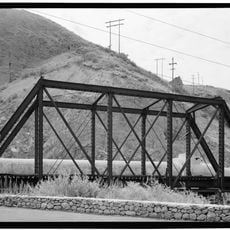
In 1899 the Telluride Power Company built Nunn's Station here, the first 40,000-volt hydroelectric plant in the world, making long-distance high-voltage transmission possible. Utah Power and Light bought it soon after, and it ran until 1940. The site is now Nunn's Park campground.
The community of curious travelers
AroundUs brings together thousands of curated places, local tips, and hidden gems, enriched daily by 93,832 contributors worldwide.