Dinosaur National Monument, National monument in Colorado and Utah, United States.
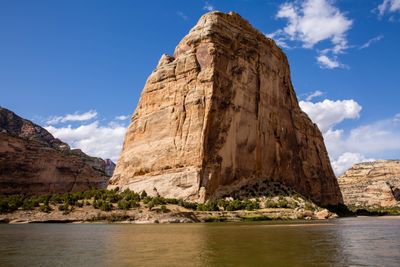
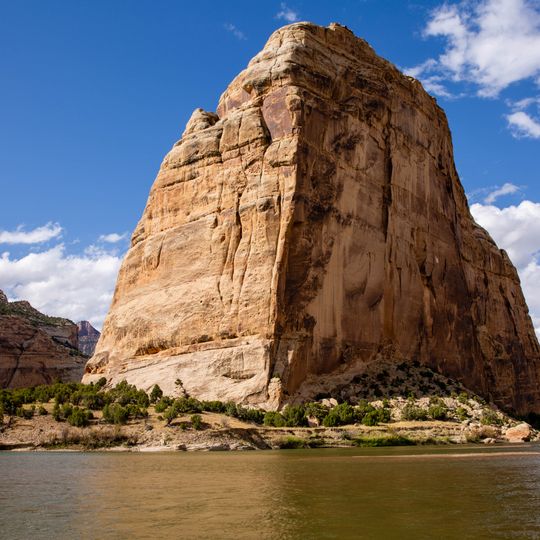
Dinosaur National Monument is a protected area spanning Colorado and Utah that contains fossilized dinosaur bones embedded in sandstone cliffs. The landscape also features deep river canyons and desert rock formations with varied colors.
Earl Douglass of the Carnegie Museum found eight Apatosaurus vertebrae at the quarry on 17 August 1909, the first dinosaur skeleton excavated there. President Woodrow Wilson proclaimed the dinosaur beds a national monument on 4 October 1915, covering about 80 acres around the quarry in Utah. In 1938 the monument was enlarged to 210,844 acres in Utah and Colorado, taking in the canyons of the Green and Yampa rivers.
Ancient rock art created by the Fremont people appears throughout the monument, showing human figures and animal designs carved directly into stone faces. These images tell us how people lived and what mattered to them in this region centuries ago.
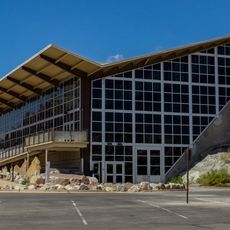
The monument covers 832.4 km² across Utah and Colorado, but the Dinosaur Quarry itself occupies only about 0.3 km² in Utah, north of Jensen; a new excavation hall opened there in 2015. The Green and Yampa river canyons make up the rest of the protected area. Petroglyph trails lie in Utah, one near the visitor center, and a fifth in Colorado.
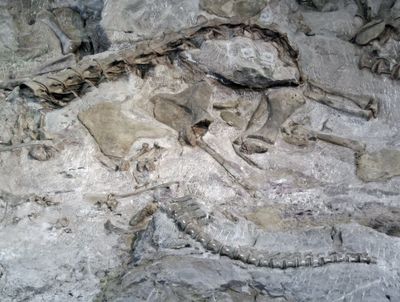
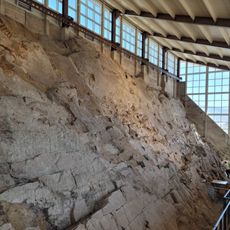
The Wall of Bones displays actual dinosaur fossils that remain embedded in their original rock face, showing them exactly as they were found. This arrangement lets visitors study the fossils in their natural position, something rarely seen in museums.
The community of curious travelers
AroundUs brings together thousands of curated places, local tips, and hidden gems, enriched daily by 93,420 contributors worldwide.