Banff Formation, Geological formation in Alberta, Canada.
The Banff Formation consists primarily of shale and limestone layers reaching up to 400 meters in thickness, deposited during the late Devonian to early Carboniferous periods approximately 372 to 346 million years ago.
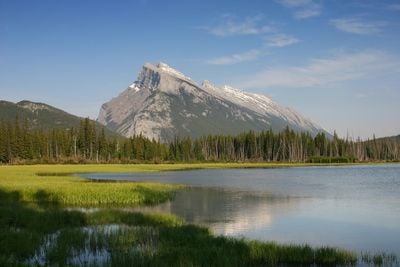
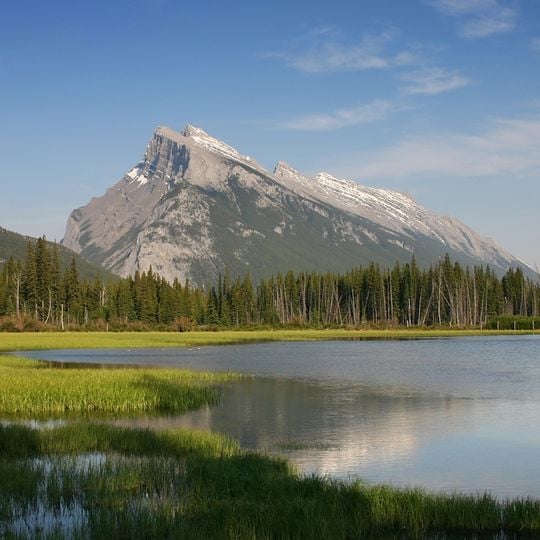
First described in 1924 by E.M. Kindle on the northwest slope of Mount Rundle near Banff town, this formation was named after the location that served as the gateway for understanding the region's geological history.
The formation provides valuable scientific data for paleoenvironmental studies and serves as a natural laboratory for geologists and students studying carbonate and shale stratigraphy in the Canadian Rockies.
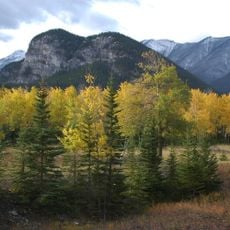
Outcrops of the Banff Formation are accessible around Mount Rundle and along road cuts, offering direct observation opportunities for geological research and educational purposes in Alberta's mountainous regions.
The formation contains distinct lithological transitions from basal shale and marlstone to middle limestone and chert layers, ending with upper sandstone and shale that illustrate ancient sea level changes.
The community of curious travelers
AroundUs brings together thousands of curated places, local tips, and hidden gems, enriched daily by 91,759 contributors worldwide.