Brooks Aqueduct, National historic aqueduct in County of Newell, Canada
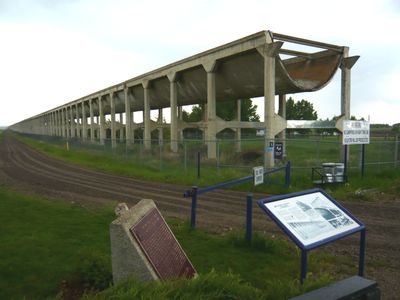
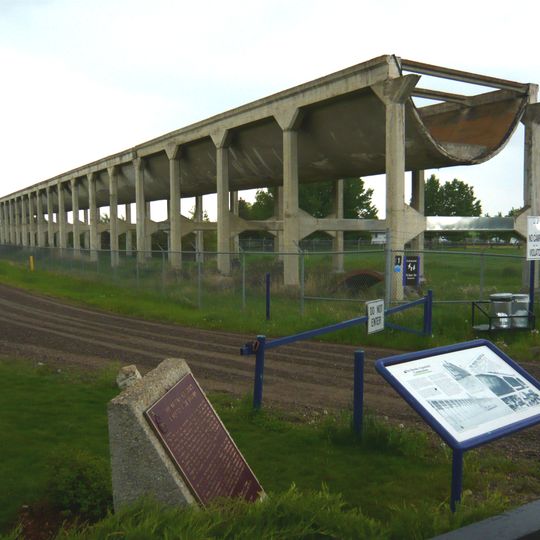
The Brooks Aqueduct is a concrete water channel that spans across a shallow valley and sits elevated above the prairie on numerous support columns. The structure connects irrigation systems and carries water to agricultural areas throughout the region.
The structure was built between 1912 and 1914 by the Canadian Pacific Railway to bring irrigation water to Alberta's dry region. The project marked a turning point in developing the area and made farming possible in places where it had been difficult before.
The aqueduct represents early 20th-century Canadian engineering innovation, demonstrating the determination to develop agricultural capabilities in Alberta's dry regions.
The aqueduct is located near Brooks and is easy to reach by car; walking paths surround the structure for viewing and photography. The site is flat and open, so it is wise to prepare for wind on exposed prairie days.
When finished, this was the largest of its kind in the world and used innovative concrete construction methods that were revolutionary for its time. The engineering effort and precision in its execution make it a remarkable example of early modern infrastructure.
The community of curious travelers
AroundUs brings together thousands of curated places, local tips, and hidden gems, enriched daily by 90,755 contributors worldwide.