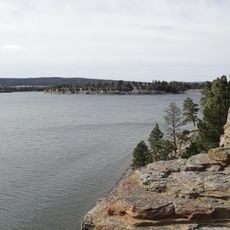
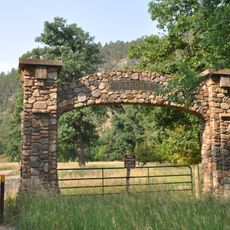
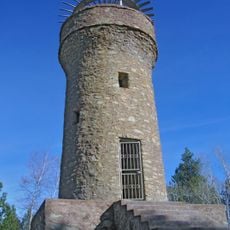
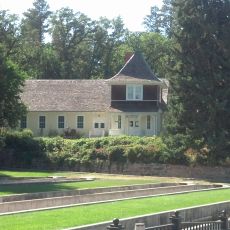
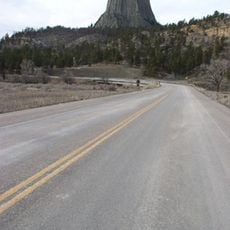
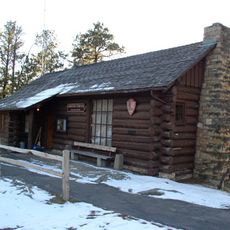
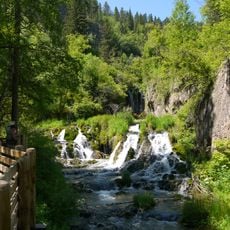
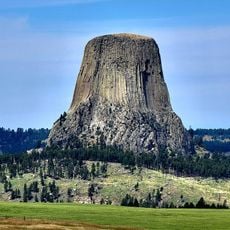
Inyan Kara Mountain, Mountain in Crook County, Wyoming, United States.
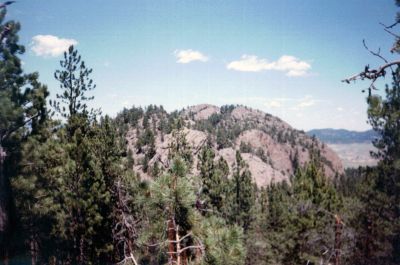
Inyan Kara Mountain is a structural dome and igneous intrusion of light-colored syenite porphyry or alkali rhyolite, emplaced as a small laccolith during the Eocene, roughly 50 to 58 million years ago. The dome measures about 1.5 miles (2 km) across, and the magma pushed up some 4,000 feet of sedimentary rock, from Pahasapa Limestone up through the Minnelusa, Opeche, Minnekahta and Spearfish red shale. It stands apart from the main Black Hills at 6,368 feet (1,941 m).
In 1874, Lt. Col. George Armstrong Custer led about 1,000 men and 500 cattle into the Black Hills to establish a military post and look for gold. His column reached Inyan Kara on July 22, 1874, and Custer climbed the summit the next day, leaving the inscription "74 Custer." Gold found near Deadwood led to the 1876 campaigns and Custer's death at the Little Bighorn. The summit was listed on the National Register of Historic Places in 1973.
The Lakota name Íŋyaŋ Káǧa means "Rock Gatherer". In Oceti Sakowin cosmology, Inyan, or stone, was one of the original spirits who gave his blue blood as water to create the Earth, and stone is addressed as Tunkasila, Grandfather. A legend ties the peak to Inyan Hoksila, Stone Boy, whose use of heated stones and steam revived his uncles and began the Inipi sweat lodge ceremony.
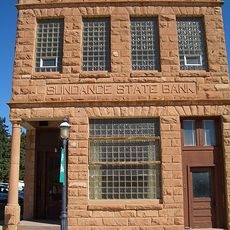
Hiking to the summit requires sturdy boots and proper gear, with conditions varying by season across the exposed slopes. Bring supplies from nearby Sundance before heading out, as there are no facilities on the mountain itself.
The rumbling reported on quiet days by Native Americans and early explorers stopped being mentioned after 1833; it has been attributed to gas escaping from burning coal seams. The peak was listed on the National Register of Historic Places in 1973.
The community of curious travelers
AroundUs brings together thousands of curated places, local tips, and hidden gems, enriched daily by 93,661 contributors worldwide.