Pakowki Formation, Geological formation in southern Alberta, Canada.
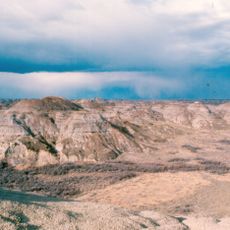
The Pakowki Formation is a geological layer in southern Alberta that spans the Western Canadian Sedimentary Basin. It consists of alternating beds of grey mudstone, olive-colored siltstone, and fine-grained sandstone stacked together over several hundred meters of depth.
The formation was first documented in 1916 by geologist D.B. Dowling and named after the nearby Pakowki Lake in Alberta. It represents an important phase of Late Cretaceous sediment deposition in the region.
The formation serves as a research center for geologists studying Late Cretaceous period sedimentary processes and ancient ecosystem development.
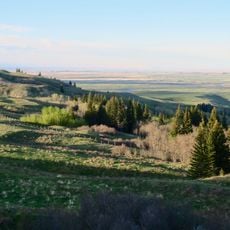
The formation is best observed at natural exposures in the badlands and along riverbanks throughout the region. Sturdy footwear and basic rock identification guides are helpful for geological field observation.
At its base sits a distinct pebble conglomerate layer that marks the boundary between this unit and the underlying Foremost Formation. This characteristic marker layer helps geologists quickly identify and distinguish the deposits.
The community of curious travelers
AroundUs brings together thousands of curated places, local tips, and hidden gems, enriched daily by 92,684 contributors worldwide.