Mary Island Light, Lighthouse in Prince of Wales-Hyder Census Area, Alaska, US
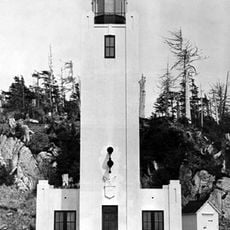
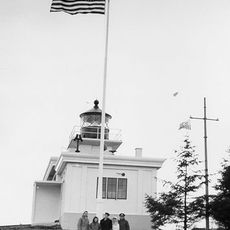
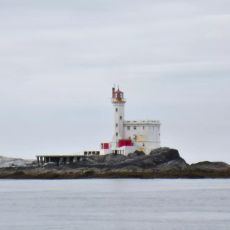
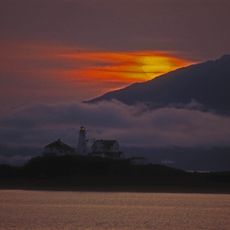
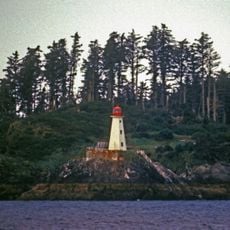
Mary Island Light is a square Art Deco concrete tower attached to a rectangular dwelling, built in 1937 on the northeastern part of Mary Island in southeastern Alaska. It replaced an octagonal wooden tower that had stood since 1903. The station stands on a remote island in the Inside Passage, and only an outhouse remains besides the lighthouse.
The station opened on 15 July 1903 with an octagonal wooden tower and a Fresnel lens, built after construction began in May 1902. After three decades of rain and sea air, it was replaced in 1937 by a concrete Art Deco lighthouse and fog signal building costing $54,792. The station was automated in 1969 and listed on the National Register of Historic Places in 2005.
The lighthouse is a reference point for fishing communities in the region and shows early maritime architecture of the 20th century. Local people and visitors recognize its importance as a historic landmark along the southeastern Alaskan coast.
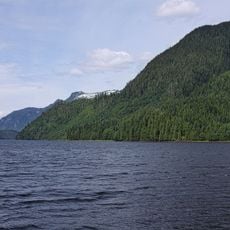
Access is only by boat or seaplane since the island has no road connections. Visitors should prepare for rough sea conditions and changeable weather, especially during months outside of summer.
The original Fresnel lenses used at Mary Island Light are kept in a museum in Juneau, not on the island. The station was automated in 1969 and its radio beacon removed; apart from an outhouse, no other buildings or structures remain at the site today.
The community of curious travelers
AroundUs brings together thousands of curated places, local tips, and hidden gems, enriched daily by 92,747 contributors worldwide.