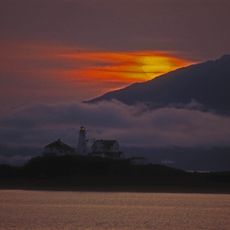
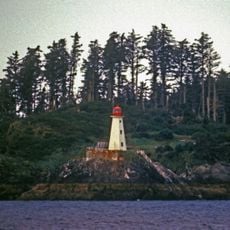
Triple Island Lightstation, Federal heritage lighthouse in North Coast Regional District, Canada
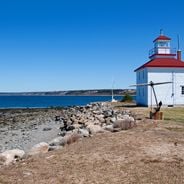
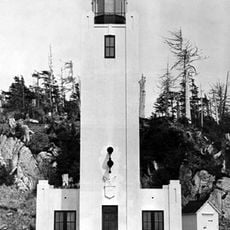
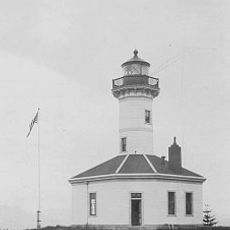
Triple Island Lightstation is a lighthouse in the North Coast Regional District, Canada, built from concrete with a square three-story base and an octagonal tower. The structure rises 22 meters above its rocky foundation and houses operational systems for maritime navigation.
Construction of the concrete station took four years, and the light entered service in 1921 on Triple Island in Dixon Entrance, about 40 km west of Prince Rupert, marking the maritime boundary between Alaska and British Columbia. It was designated a National Historic Site of Canada in 1974 and a heritage lighthouse on 12 February 2015.
The station is staffed by Canadian Coast Guard personnel on 28-day rotations, so the light stays manned year-round. The keepers' quarters and machinery share the rectangular concrete building attached to the tower. The site was listed as a heritage lighthouse on 12 February 2015 under the Heritage Lighthouse Protection Act.
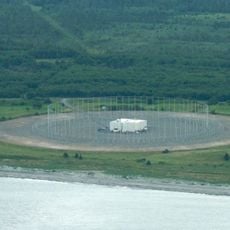
The station is not open to the public and is supplied by helicopter; a helipad (IATA: YTI) covers much of the rest of the islet. It stands on Triple Island in the Dundas Island group, about 40 km west of Prince Rupert at the Dixon Entrance. Approach only by private boat, and keep clear of Coast Guard operations.
The station's logbooks recorded sea temperature and salinity every day from 1939 to 1970, 31 years of readings for the Department of Fisheries and Oceans. The work tied the lightstation to the British Columbia Shore Station Oceanographic Program, so keepers doubled as coastal observers.
The community of curious travelers
AroundUs brings together thousands of curated places, local tips, and hidden gems, enriched daily by 92,704 contributors worldwide.