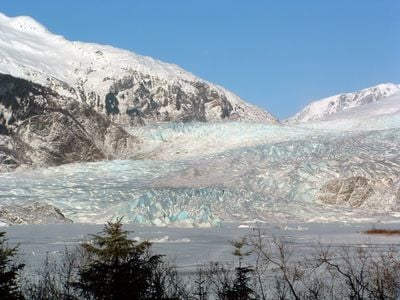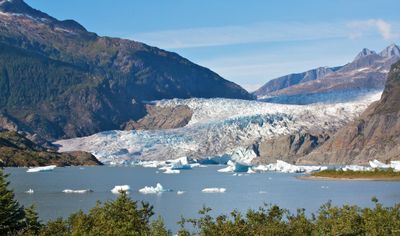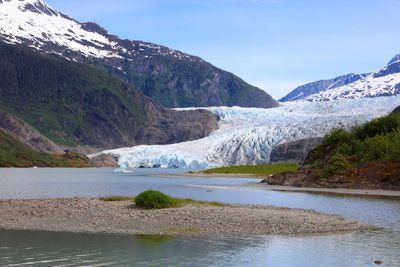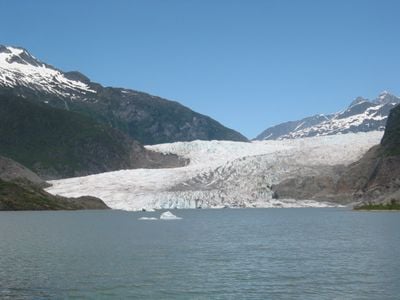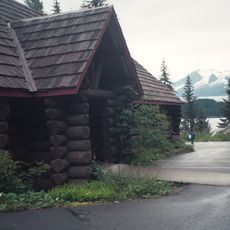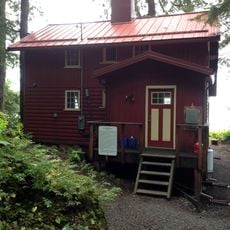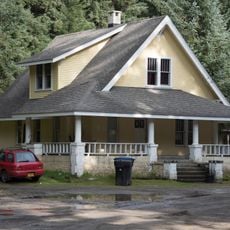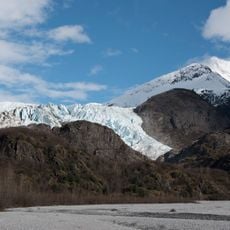
Mendenhall Glacier, Glacier in Tongass National Forest, Alaska.
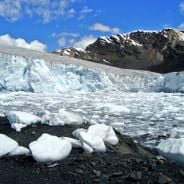
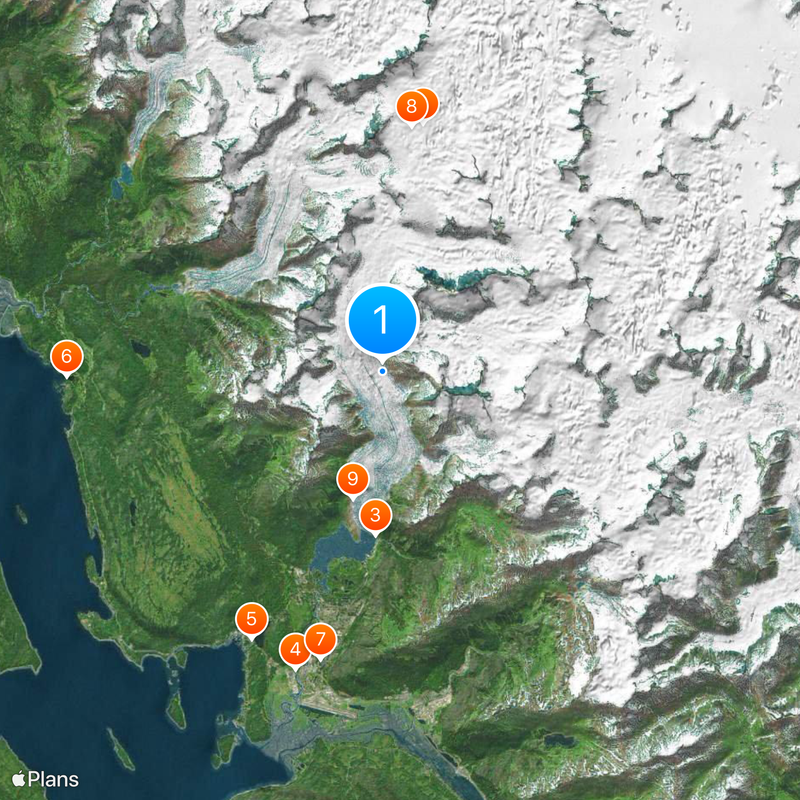
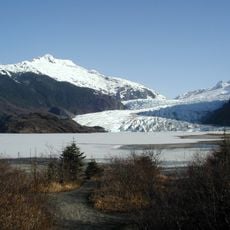
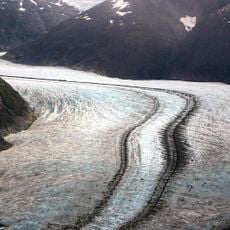
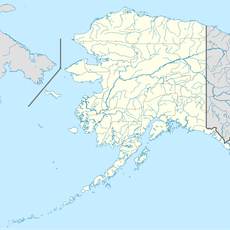
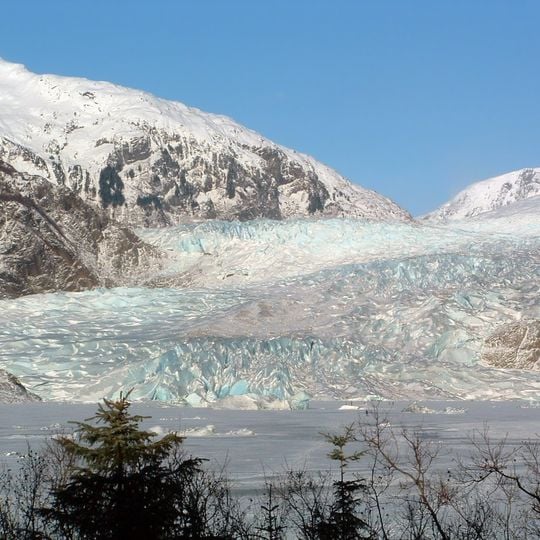
Mendenhall Glacier is a glacier about 13.6 miles (21.9 km) long in Mendenhall Valley, roughly 12 miles (19 km) from downtown Juneau, Alaska. It flows from the Juneau Icefield down to Mendenhall Lake, ending in a fractured, debris-streaked ice face where the ice meets a flat, snow-dusted plain. The glacier and its surroundings lie within the 5,815-acre Mendenhall Glacier Recreation Area of Tongass National Forest.
The Tlingit knew it as Sitaantaago, "the Glacier Behind the Town", or Aak'wtaaksit, "the Glacier Behind the Little Lake". Naturalist John Muir named it Auke Glacier in 1879 for the Auk Kwaan band; in 1891 it was renamed for Thomas Corwin Mendenhall. It has retreated about 2.5 miles since its Little Ice Age maximum in the mid-1700s, and in November 2025 its face withdrew from Mendenhall Lake for the first time in modern history.
The Tlingit community has known this glacier for centuries as Aak'wtaaksit and used its cold waters for fishing. Their oral traditions tell of the ever-changing ice landscape and the animals that come here to feed.
The visitor center offers spotting scopes and information about six marked hiking trails in the area. Most trails require sturdy footwear because the ground is often wet and uneven.
In 2012, tree stumps and logs with roots and bark still attached emerged from beneath the retreating ice, standing in their original growth position. One scientist dated the most recent stumps at 1,200 to 1,400 years old and the oldest at about 2,350 years. The Forest Service's elevated boardwalks over Steep Creek are where visitors watch black bears take salmon.
The community of curious travelers
AroundUs brings together thousands of curated places, local tips, and hidden gems, enriched daily by 94,041 contributors worldwide.