Yellowhead Pass, Rail mountain pass in Jasper National Park, Canada
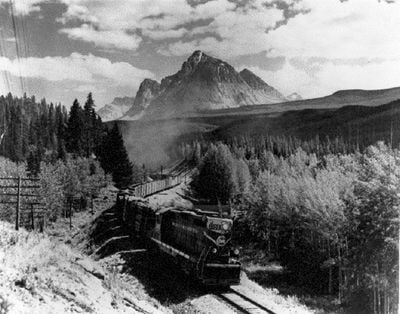
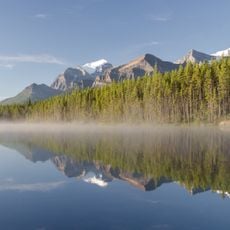
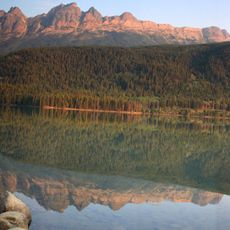
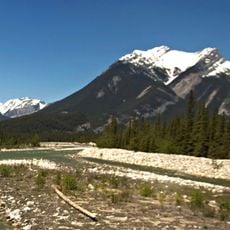
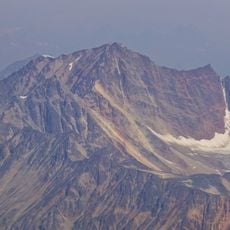
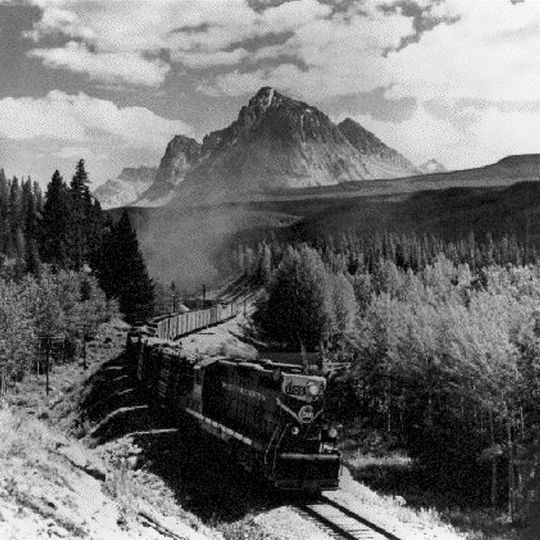
Yellowhead Pass crosses the Continental Divide of the Canadian Rockies on the Alberta–British Columbia boundary, between Jasper National Park and Mount Robson Provincial Park, at 1,131 m. A steel railway track curves between stands of trees below a bare rock mountain, with the Miette River just east of the pass and Yellowhead Lake west of it, draining to the Fraser River.
Indigenous traders first established routes through this gap before European fur trappers explored it in the early 1800s. The railway and highway infrastructure that followed preserved this same passage as a major transportation corridor through the mountains.
The pass takes its name from Pierre Bostonais, an Iroquois-Métis trapper nicknamed Tête Jaune, French for "yellow head", for his blond hair. He guided a Hudson's Bay Company expedition through the pass in 1820. Because of the many hides carried over it in the fur-trade era, the route was also known as Leather Pass.
The pass lies on the Alberta–British Columbia boundary, where the Yellowhead Highway and the Canadian National Railway main line cross the Continental Divide. Via Rail's Canadian and Jasper–Prince Rupert trains, plus the Jasper section of the Rocky Mountaineer, run through it. The grade is gentle on both sides, so the corridor stays open year-round.
This pass holds the lowest elevation of all major railway crossings in the Canadian Rockies, making year-round train service possible through the mountains. This advantage in terrain makes it the preferred route when other high-altitude passes become difficult to navigate.
The community of curious travelers
AroundUs brings together thousands of curated places, local tips, and hidden gems, enriched daily by 92,715 contributors worldwide.