Viking Formation, Sandstone formation in Alberta, Canada.
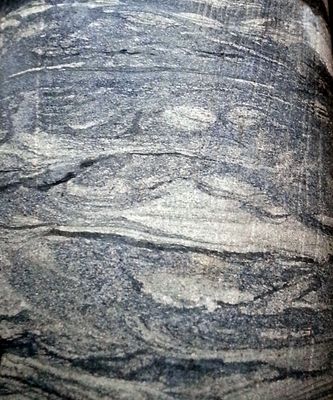
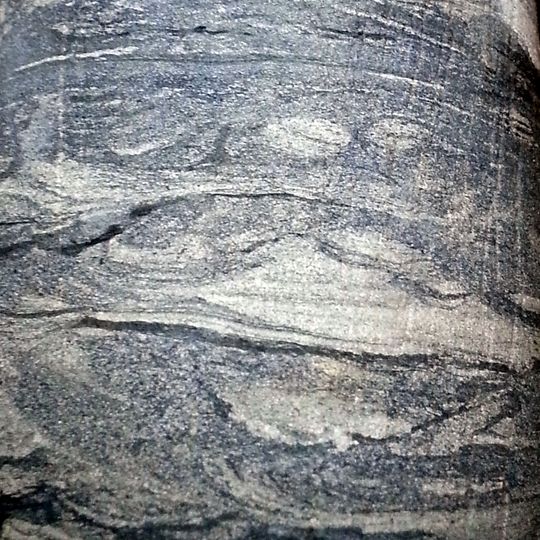
The Viking Formation is a Cretaceous stratigraphic unit in the subsurface of central and eastern Alberta and west-central Saskatchewan. It consists of fine- to coarse-grained sandstone with interbeds of conglomerate and cherty conglomeratic sandstone, and reaches a maximum thickness of 50 metres in central Alberta, thinning to 40 metres in Saskatchewan.
The Viking Formation was first described by Dowling in 1919 in the Viking-Kinsella oil field, and it takes its name from the town of Viking, Alberta. It is a Cretaceous stratigraphic unit of the Western Canadian Sedimentary Basin, made up of fine to coarse grained sandstone with interbeds of conglomerate and cherty conglomeratic sandstone.
The formation contains numerous fossil deposits that provide scientists with information about ancient marine life and environmental conditions in western Canada.
Many outcrops are visible from roads, but some require permission to cross private land, so it helps to check access beforehand. Bring a hand lens and small hammer if you want to examine the rocks more closely.
The Viking Formation was first described by Dowling in 1919 in the Viking-Kinsella oil field, the deposit that gave the unit its name. Its initial established recoverable oil reserve was 88.7 million m³, of which 66.8 million m³ had been produced by 2008. Gas reserves totalled 277.9 million e³m³, with 103.4 million e³m³ already produced.
The community of curious travelers
AroundUs brings together thousands of curated places, local tips, and hidden gems, enriched daily by 92,632 contributors worldwide.