Gow crater, Impact crater in northern Saskatchewan, Canada
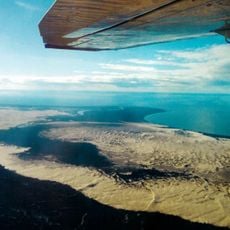
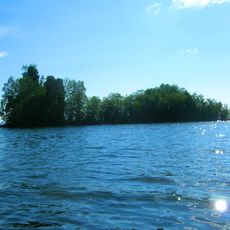
Gow crater is a 5-kilometre-wide impact crater in Saskatchewan, Canada, holding Gow Lake, whose centre is occupied by Calder Island, a recursive island raised by the crater's central uplift. It is the smallest known Canadian crater with an uplift structure.
Gow crater is an impact crater in Saskatchewan whose age is estimated at less than 250 million years, from the Triassic or later. It is the only preserved example on Earth of a transitional impact structure, with relatively smooth walls and a floor partly covered by debris slumped from the walls. The larger Deep Bay crater lies about 90 kilometres to the east, and the Carswell structure to the northwest.
The site received its name in memory of James Richard Gow, a Canadian soldier who lost his life during World War II in 1945.
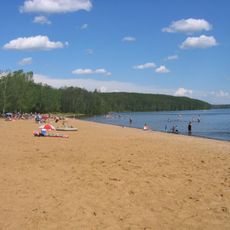
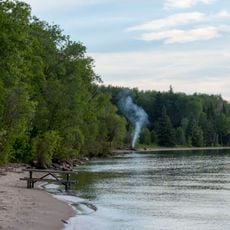
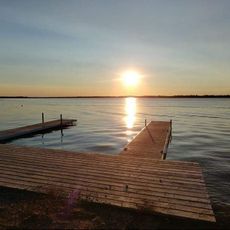
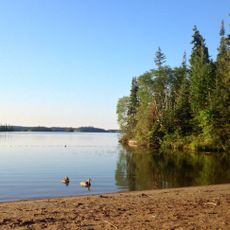
Gow Lake holds burbot, lake trout, lake whitefish, northern pike and walleye, and its shoreline runs 47 kilometres. The crater lies in northern Saskatchewan, roughly 90 kilometres west of the larger Deep Bay crater, so access is by remote roads and the surrounding land is not developed for visitors.
This is the smallest known impact structure in Canada featuring an uplift formation in its center. The rock formations here occur nowhere else on Earth.
The community of curious travelers
AroundUs brings together thousands of curated places, local tips, and hidden gems, enriched daily by 94,447 contributors worldwide.