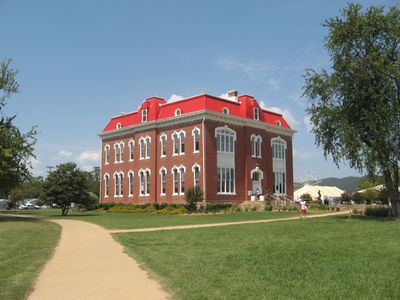
Choctaw Capitol Building, Second Empire architectural government building in Tuskahoma, United States.
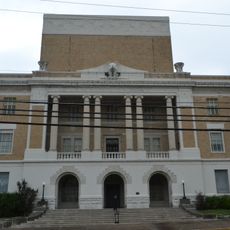
The Choctaw Capitol Building is a two-story red brick and sandstone structure with a mansard roof attic, completed in September 1884 at Tushka Homma, two miles north of Tuskahoma. It measures 72 feet 11 inches by 62 feet 4 inches and rises 54 feet 2 inches to its chimneys. Inside were rooms for the Senate, House of Representatives, Principal Chief, Supreme Court and constitutional officers; it now serves as the Choctaw Nation museum.
After decades of moving the Choctaw capital among several locations, the National Council in 1883 authorized a permanent seat at Tushka Homma, meaning "home of the red warrior." The Capitol was completed in September 1884 at a cost of $30,000, built of red native brick, sandstone, and nearby timber. It housed the Senate, House of Representatives, Principal Chief, and Supreme Court until the Choctaw Nation was abolished and Oklahoma became a state in 1907.
The name Tushka Homma means "home of the red warrior" in Choctaw, later standardized as Tuskahoma. The grounds hold a Choctaw war veterans' memorial with a section honoring the Choctaw Code Talkers, who first used Native American languages as military code in World War I. A Ten Commandments monument inscribed in Choctaw and English was unveiled there in May 2017.
The museum housed in the building welcomes visitors throughout the year with its exhibitions on display. A veterans memorial located on the grounds provides an additional place to visit and offers a space for reflection.
Every year, an annual festival on the Capitol grounds draws large crowds who gather for music and celebrations during the Labor Day period. This makes the site an active center for community gathering, extending far beyond its historical function as a seat of government.
The community of curious travelers
AroundUs brings together thousands of curated places, local tips, and hidden gems, enriched daily by 93,707 contributors worldwide.