Kantara Castle, Medieval fort in Kantara, Cyprus
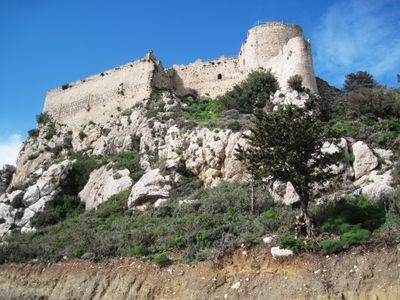
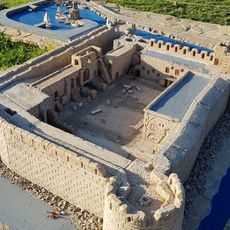
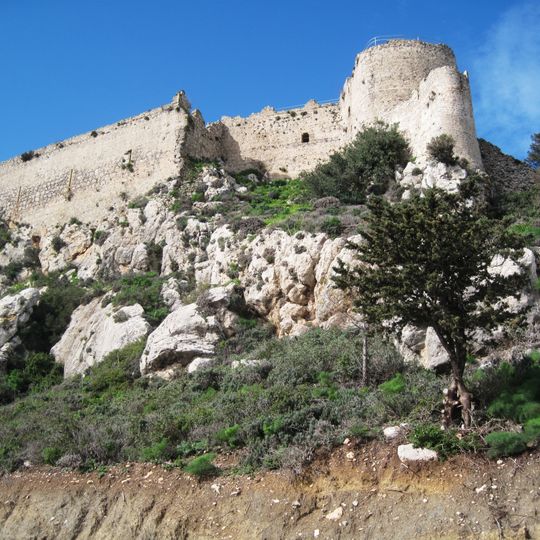
Kantara Castle stands on a ridge of the Kyrenia Mountains at 550–600 metres, built from the barren granite and sandstone bedrock of the slopes. Its 120 by 70 metre wall enclosed ten garrison rooms, and a horseshoe-shaped tower north of the main gate, added between 1208 and 1228, has an apsidal vault at its front to absorb shock. A narrow valley on the eastern side, guarded by twin towers named Nicolas and Faucherre, leads through a barrel-vaulted barbican to the main gate.
The Byzantines built the fortress after 965 CE to defend against Arab raids, and it first appeared in written records during Richard the Lionheart's conquest in 1191. King James I strengthened the walls significantly in 1391, and most remains visible today date from that period before the Venetians abandoned it in 1525.
The castle's name comes from the Cypriot Arabic word kandak, meaning stone bridge. Its garrison signalled to Buffavento and Saint Hilarion castles, which are visible from the Kyrenia range. The nearby Kantara Monastery took its name from the castle.
The site is surrounded by steep cliffs on three sides, so wear sturdy footwear and be prepared for windy conditions. The paths are sometimes narrow and uneven, requiring good balance and a moderate level of fitness.
King James I reinforced the castle walls in 1391, and most remains visible today date from these renovations before Venetians abandoned it in 1525.
The community of curious travelers
AroundUs brings together thousands of curated places, local tips, and hidden gems, enriched daily by 92,788 contributors worldwide.