St. Barnabas Monastery, Religious monastery and archaeological museum in Enkomi, Cyprus
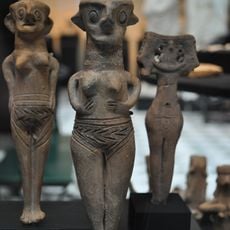
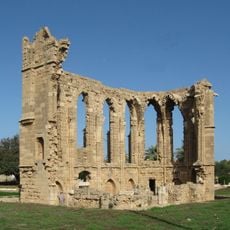
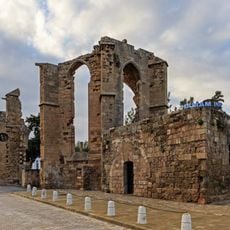
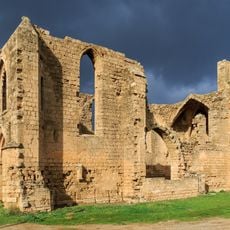
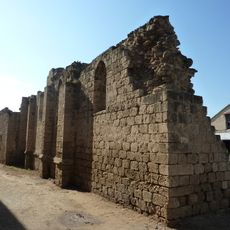
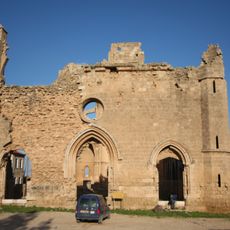
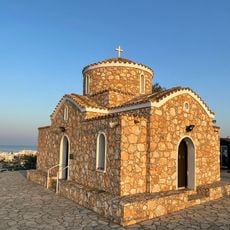
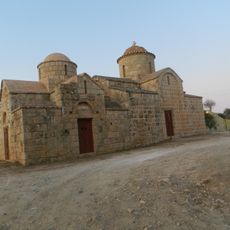
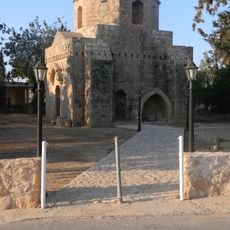
St. Barnabas Monastery is a religious complex with a church featuring two remaining domes that shape its roofline, along with monks' cells that now function as exhibition spaces. The site also houses an archaeological collection displaying artifacts from different ancient periods.
The first shrine church was founded in the late fifth century, perhaps in 477, when Emperor Zeno financed a basilica near where Archbishop Anthemius found Barnabas's body. Two buildings were added under Justinian I by Archbishop Philoxenos. The basilica was destroyed in late seventh-century Arab raids; the surviving east end was incorporated into a cross-in-square vaulted basilica built around 900.
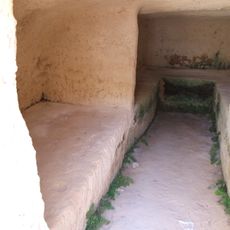
The monastery is named after Barnabas, the apostle said to have appeared three times in a dream to Archbishop Anthemius and shown him where his tomb lay. A fair was long held outside its walls on 11 June, a tradition interrupted after 1974. Vespers and liturgy were celebrated again on 21 June 2005, the first since that year.
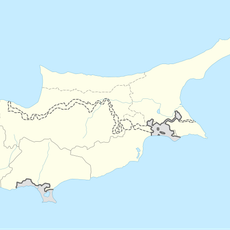
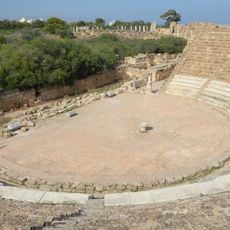
The monastery stands about 3 km west of the ancient city of Salamis, near Enkomi in Northern Cyprus. The church now serves as a museum of icons, while the former cloisters hold an archaeological museum with artefacts reaching back to the Neolithic. The last monk left in 1976, and the site has been under Turkish Cypriot control since 1974.
According to tradition, Archbishop Anthemius was shown the burial place of Barnabas in a dream three times; there he found a chest holding the saint's relics and a copy of the Gospel of Matthew. He took both to Constantinople, where the emperor Zeno granted the Cypriot church its independence.
The community of curious travelers
AroundUs brings together thousands of curated places, local tips, and hidden gems, enriched daily by 92,834 contributors worldwide.