Palazzo del Provveditore, Renaissance palace in Famagusta, Cyprus
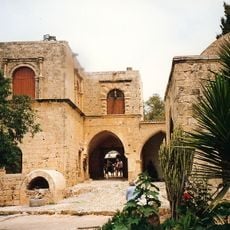
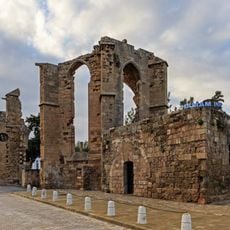
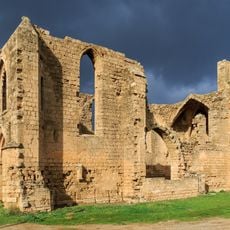
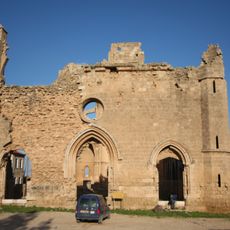
The Palazzo del Provveditore is a Renaissance palace in Famagusta featuring three grand arches supported by columns taken from nearby Salamis, with intricate stone carvings framing the main entrance. The courtyard displays military equipment, ancient columns, and sculptures collected across different periods.
Built by the Lusignan kings of Cyprus, the palace is first documented in 1300-1302, when Genoese official Lamberto di Sambuceto called it the palace of the King of Cyprus; Camille Enlart attributed it to Henry II. The Venetians rebuilt the facade and rear in Italian Renaissance style in 1552-1554. Most sources date the loss of the central sections to the 1571 siege of Famagusta, though Ottoman descriptions of that year mention no destruction.
The name Provveditore refers to the Venetian governor who lived here; the palace was also called the King's Palace after the Lusignan domini regis Cipri. The Namık Kemal Dungeon Museum occupies part of the surviving structures, and the courtyard holds modern cannons, cannonballs and pieces of a large granite column.
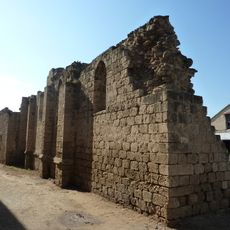
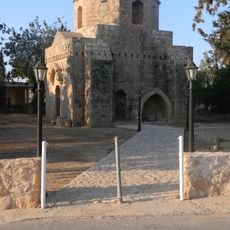
The courtyard is entered from the street through the surviving facade; the chapel, used as a museum until 1974, and the L-shaped Venetian wall stand at the back. The Namık Kemal Dungeon Museum occupies part of the remaining structures. The courtyard holds modern cannons, cannonballs and pieces of a large granite column.
The small rooms facing the courtyard in the southeast "arm" served as prisons or arsenals, and the chapel was a museum until 1974, restored between 1930 and 1950. The courtyard now holds modern cannons, cannonballs and pieces of a large granite column.
The community of curious travelers
AroundUs brings together thousands of curated places, local tips, and hidden gems, enriched daily by 92,789 contributors worldwide.