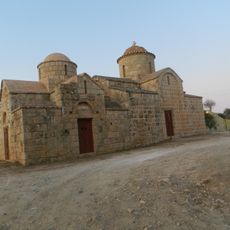
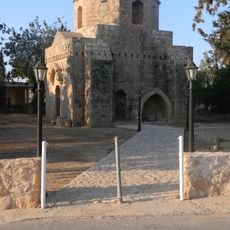
Agia Napa Monastery, Medieval monastery in Agia Napa, Cyprus.
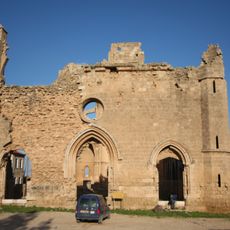
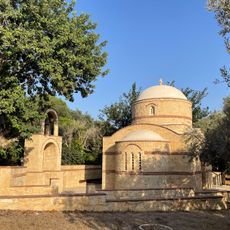
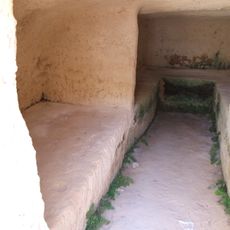
Agia Napa Monastery is a medieval religious building with stone walls enclosing a central courtyard containing a fountain and multiple rooms cut into the surrounding rock. The complex includes underground chambers that once served storage and shelter purposes.
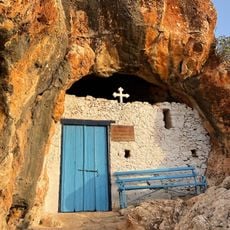
A hunter's dog is said to have found a miraculous icon of the Virgin in the cave where the church now stands; the icon was probably hidden there during the iconoclasm of the 7th–8th centuries. The cave was built over in the 14th century, and the name Agia Napa is first recorded in 1366. The present monastery was founded in the 15th century under Venetian rule, financed by a wealthy woman from Famagusta. After the Ottoman conquest of 1571 it passed from Latin to Orthodox hands; monks left in 1758 and restoration came in 1950.
The name comes from Panagia tis Napis, "Virgin of the Forest", shortened over time to Agia Napa; the icon itself was called Panagia Napa. The name Agia Napa is first recorded in 1366. The monastery now functions as a museum, though festivals and other secular events are sometimes held here, and the club district begins on the square beside it.
The site opens daily to the public and operates as a conference center for churches throughout Cyprus and the Middle East region. Clear signage helps visitors navigate through the different areas of the complex.
An ancient plane tree estimated at 600 years old stands before the southern gate and marks the monastery entrance. This tree has become a symbolic landmark of the site and regularly draws visitors who admire its age and stature.
The community of curious travelers
AroundUs brings together thousands of curated places, local tips, and hidden gems, enriched daily by 92,789 contributors worldwide.