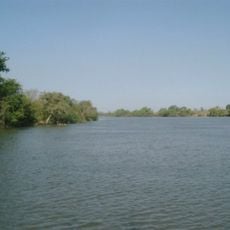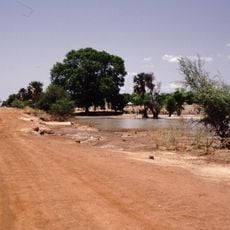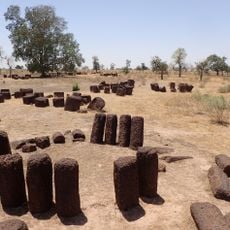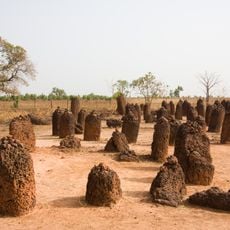
Senegambian stone circles, Archaeological site in West Africa, Gambia and Senegal.
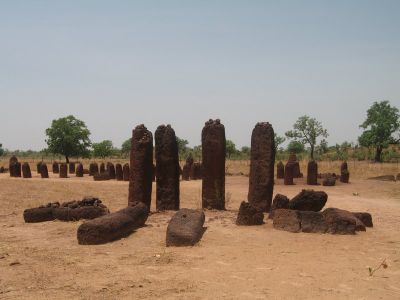
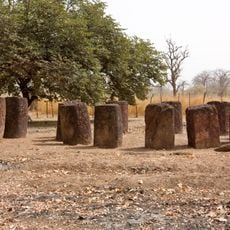
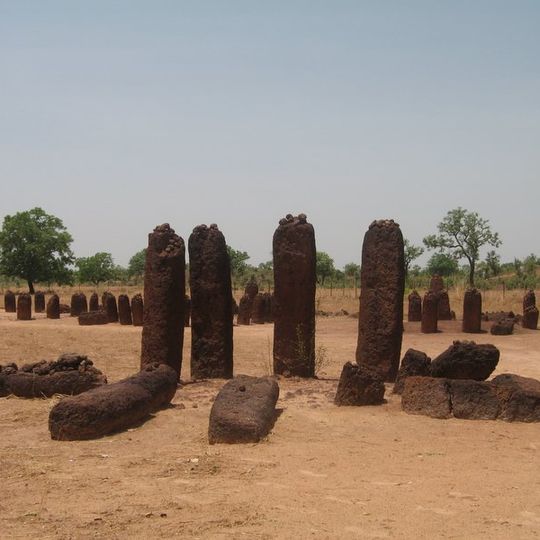
The Senegambian stone circles include more than 1,000 megalithic formations spread across a vast territory straddling the border between Gambia and Senegal. The four principal locations—Sine Ngayène, Wanar, Wassu, and Kerr Batch—each contain dozens of circles made from shaped laterite blocks standing upright, often accompanied by smaller horizontal markers.
The monuments were raised between roughly the 3rd century BCE and the 16th century CE, with pottery analysis suggesting a narrower span from the 7th to the 15th century. Burial mounds near Wassu date to AD 927–1305. The pillars were cut from laterite with iron tools, then shaped into cylinders or polygons about two metres high. Excavations at Sine Ngayène, Tiékène-Boussoura, Kodiam and Saré-Diouldé were led by Guy Thilmans, Cyr Descamps and Bernard Khayat between 1973 and 1980.
The Serer credit the stones to the Soos wee, the 'men from the beginning of Kaabu', former occupants of the area; Wolof and Fula oral traditions name the Serer as builders. The Serer still use funerary houses like those at Wanar, and the Bassari of the Kédougou region bury important community members in stone funerary huts built with techniques similar to those found at the sites.
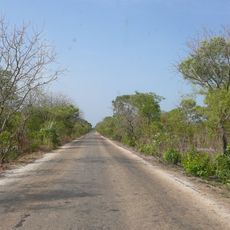
The sites are easiest to reach during the dry season from November through April, when unpaved paths remain passable. Wassu and Kerr Batch offer the most accessible complexes, with local guides available on request to explain the layout and features.
Sine Ngayène contains 52 circles arranged along a Y-shaped axis, forming the largest concentration of megalithic circles in the region. Some of the stones show traces of working patterns that point to specialized tools and careful planning.
The community of curious travelers
AroundUs brings together thousands of curated places, local tips, and hidden gems, enriched daily by 92,913 contributors worldwide.