Luba Crater Scientific Reserve, Protected rainforest area in Bioko Island, Equatorial Guinea.
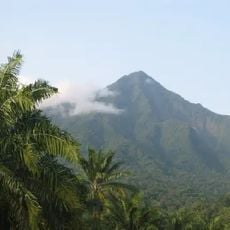
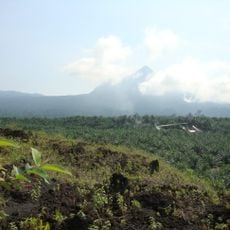
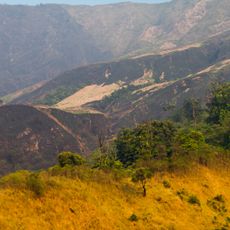
Luba Crater Scientific Reserve is a forested protected area on Bioko Island featuring dense rainforest spread across roughly 51,000 hectares. The landscape encompasses layers of woodland vegetation that rises toward volcanic peaks, shaped by one of the world's rainiest climates.
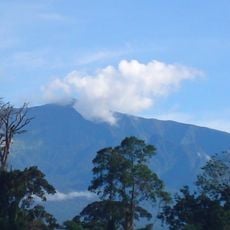
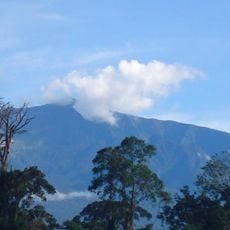
The reserve protects the Gran Caldera de Luba, the 2,261 m summit of Bioko's southern volcanic massif, a shield volcano once called San Carlos that has been active within the last 2,000 years. Spanish NGO Asociación Amigos de Doñana began conservation and ecotourism work on the island in 1995, followed by biodiversity studies with the Ministry of Forestry, Fisheries and the Environment in 1996 and 1997. Since 1998 the Bioko Biodiversity Protection Program, run by the National University of Equatorial Guinea, Drexel University and INDEFOR-AP, has carried out conservation in the reserve. A 2007 Spanish expedition from the Universidad Politécnica de Madrid reported the first crossing of the crater, climbing its near-vertical walls with ropes.
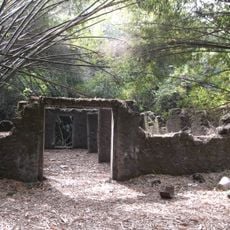
Local communities on Bioko's southern slopes regard the crater as a place inhabited by spirits, according to the Spanish account of the island. Before independence from Spain in 1968, cocoa was the island's main cash crop; since then many plantations have been abandoned and reclaimed by forest, and most residents now depend on subsistence farming.
The crater is reached only on foot, after roughly two days of walking from the nearest road access, so visits require a guided expedition with supplies and time. Rain can reach up to 10,000 mm a year, and temperatures in the lower zones range from 17 °C to 34 °C. Hunting is banned throughout the reserve.
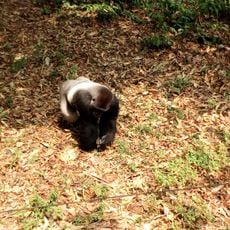
The forest here is home to five primate species that are threatened across the globe and found in very few places. Their presence makes this a special location for scientists studying these rare animals and understanding their survival.
The community of curious travelers
AroundUs brings together thousands of curated places, local tips, and hidden gems, enriched daily by 92,894 contributors worldwide.