Bahal temple, Buddhist temple complex in Padang Bolak, Indonesia
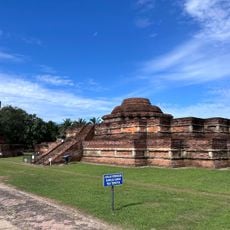
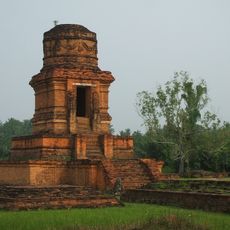
Bahal is a Vajrayana Buddhist candi complex of three red-brick temples in Bahal village, Padang Bolak, North Sumatra. Bahal I, the largest, stands on a raised square base about 7 m wide with a 2.5 m cylindrical dagoba roof; each temple yard is enclosed by a brick wall roughly 1 m thick and 1 m tall, entered through an east gate flanked by 60 cm walls.
The three brick shrines date from the 11th to 13th centuries and are linked to the Pannai Kingdom, a trading port under Srivijayan influence. At least 25 brick shrines were built across the Padang Lawas plain, a route between Sumatra's coasts. Candi Bahal I was restored in 1977–1978 and 1982–1983, and Candi Bahal II between 1991 and 1992.
Locals call the site biaro, from vihara, the Sanskrit word for monastery, which points to its original use. The name Bahal is still used in Nepal for two-storey Vajrayana temples, and the rampant lions flanking Biaro Bahal I resemble carvings at Polonnaruwa, the 11th-century capital of Sri Lanka. Portibi, the district name, comes from the Batak word for earth, borrowed from the Sanskrit Pertiwi.
The three candis are spread about 500 metres apart, with Bahal II roughly 100 metres from the road and some 300 metres from Bahal I. The site lies about three hours by car from Padangsidempuan, and the remote location and poor infrastructure limit tourism. Bahal I was restored in 1977–1978 and 1982–1983, Bahal II in 1991–1992.
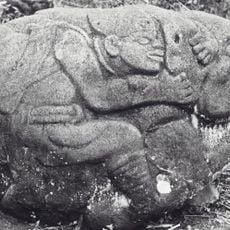
The name Bahal is still used in Nepal for two-storeyed Vajrayana temples, and the rampant lions flanking Biaro Bahal I resemble carvings at Polonnaruwa, the 11th-century capital of Sri Lanka. A Heruka statue found at Bahal II shows a demonic figure dancing on a corpse, holding a staff in its right hand.
The community of curious travelers
AroundUs brings together thousands of curated places, local tips, and hidden gems, enriched daily by 92,892 contributors worldwide.