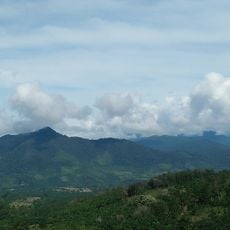
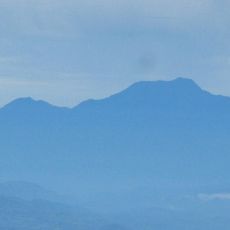
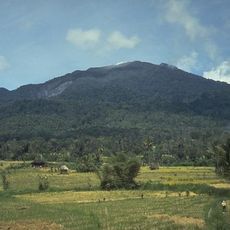
Dolok Sibualbuali, Stratovolcano in North Sumatra, Indonesia.
Dolok Sibualbuali is a stratovolcano in northern Sumatra, Indonesia. It has two solfatara fields on its eastern flank and a rhyolitic-dacitic lava dome that erupted from the Toru-Asik fault.
The volcano formed through tectonic interactions between the Eurasian and Indo-Australian plates, which created the entire Bukit Barisan mountain chain. This volcanic activity has shaped the region's geology over millions of years.
The name Dolok Sibualbuali is Batak Angkola; dolok means mountain in the Batak languages. The two solfatara fields on the eastern flank are the mountain's visible geothermal feature, and the Toru-Asik fault, which produced the rhyolitic-dacitic lava dome, gives the summit area its structure.
Visitors must obtain permits from the Dolok Sibual-Buali Nature Reserve authorities and hire a local guide before attempting the climb. The mountain requires good fitness and proper equipment suitable for rough terrain and potential steam vents.
The lava dome on Sibualbuali is rhyolitic-dacitic and was erupted along the Toru-Asik fault, a structure that also shaped the dome's position on the mountain. The two solfatara fields lie on the eastern flank, while the fumaroles sit on the southern slope.
The community of curious travelers
AroundUs brings together thousands of curated places, local tips, and hidden gems, enriched daily by 93,066 contributors worldwide.