Schesaplana, Mountain peak at Austrian-Swiss border
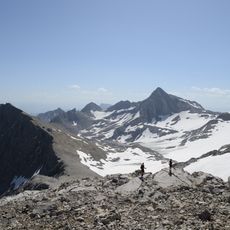
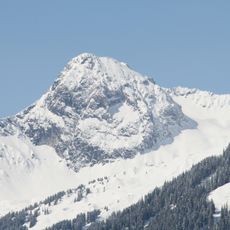
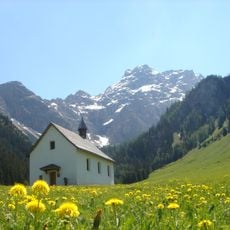
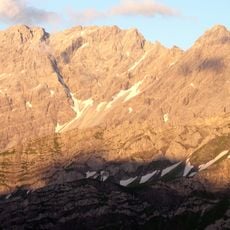
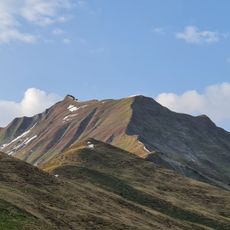
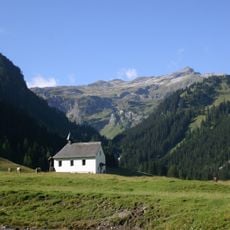
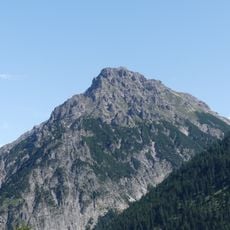
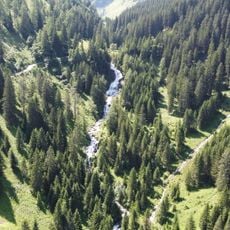
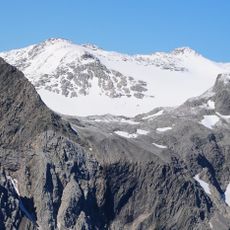
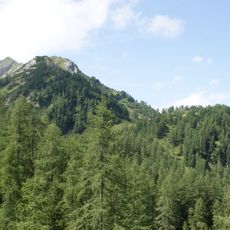
Schesaplana is a 2,965-meter (9,728-foot) peak at the Austrian-Swiss border and the highest point of the Rätikon range. The mountain lies between Vorarlberg and Graubünden, with several established hiking routes of varying difficulty.
The 1610 date often cited for a first ascent is not supported: David Pappus von Tratzberg's 1610 border inspection turned back near the Totalp and never reached the summit. The first documented climb was made in the 1730s by the Prättigau pastor Nicolin Sererhard with two companions, crossing from Seewis to Brand. In 1790 Baron Franz Ludwig von Sternbach and hunter Josef Sugg made the first ascent from Brand, and on New Year's Day 1900 three skiers reached the top, one of the earliest ski tours on a high Eastern Alpine peak.
The name combines Latin "saxa" and "plana", meaning a jagged rock that is flat, and earlier forms were "Sergiaplana" and "Scaessa Planna". Johanna Spyri named the Schesaplana in her 1881 novel Heidi, where the girl points it out to her grandfather from the goat meadow alongside the Falknis, some 11 km west.
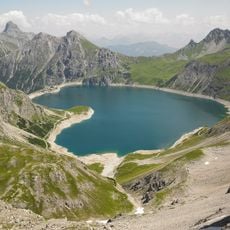
Several hiking routes begin from the Lünersee cable car station, leading to the summit with different levels of challenge. The best time to climb is between June and September when trails are snow-free and conditions are safest.
Scientists discovered an exceptionally large ichthyosaur tooth during excavations on the southern slope in 2022. This finding reveals that prehistoric seas once covered the region, leaving behind rare fossils millions of years later.
The community of curious travelers
AroundUs brings together thousands of curated places, local tips, and hidden gems, enriched daily by 93,856 contributors worldwide.