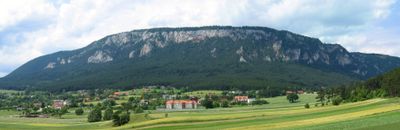
Hohe Wand, Mountain ridge in the Gutenstein Alps, Lower Austria, Austria
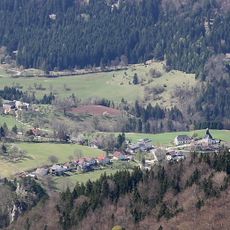
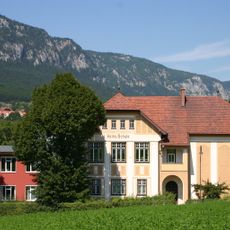
Hohe Wand is a limestone mountain range in Lower Austria that extends for 8 kilometers and is characterized by steep rock faces on its southern and southeastern sides. The summit reaches 1,132 meters and is crossed by over 700 climbing routes that provide options for different skill levels.
The plateau road was built in eleven months and opened on 3 December 1932 by Karl Buresch, then governor of Lower Austria; it branches off the Stollhof–Maiersdorf road and remained a toll road until the end of 2022. From 14 August 1965 a double chairlift ran from Grünbach to the Plackles, carrying passengers up in 19 minutes until it was dismantled on 10 August 1994.
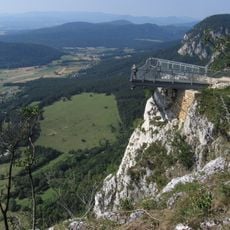
The name "Hohe Wand" (High Wall) comes from the roughly 200-metre rock faces on the south and southeast sides. The plateau holds many mountain inns and Alpine huts plus weekend houses, especially in Wanddörfl. The Hohe Wand is considered one of Vienna's Hausberge, and its southeast-facing slopes are used for paragliding and hang gliding in south-to-east winds.
Hiking paths start from several points including Dürnbach valley, Grünbach, and Miesenbach and lead to the summit with varying levels of difficulty. Visitors should bring sturdy shoes and plenty of water, as the routes can be demanding otherwise.
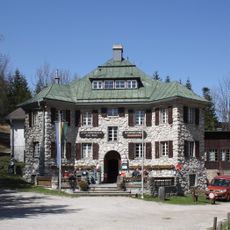
The plateau is home to an introduced colony of Alpine ibex: three animals escaped from an enclosure in 2003 and multiplied to roughly 75 by 2013, despite authorised culls. The 18-metre steel lookout tower built in 2004 near the former Wiener Neustädter Haus, now the Alpine and Local History Museum, gives views to the Schneeberg and as far as the Ötscher.
The community of curious travelers
AroundUs brings together thousands of curated places, local tips, and hidden gems, enriched daily by 93,742 contributors worldwide.