Burg Güssing, Medieval castle and museum in Güssing, Austria
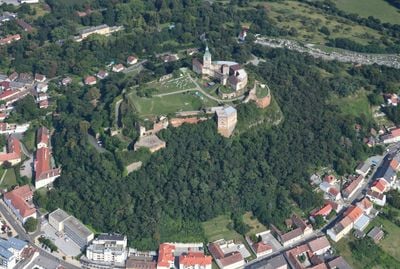
Burg Güssing is a medieval fortress built on volcanic rock in the town of Güssing. The structure features multiple towers and walls that were expanded over time and now houses a museum with historical objects and displays.
Wolfer, a German knight, founded a Benedictine monastery on the hill in 1157; the founding charter calls the site an uninhabited wasteland, and the first building was of stone, not wood. Around 1180 Béla III confiscated the abbey and used its stone buildings for a royal castle, Novum Castrum, first recorded in 1198. On 30 June 1524 the castle passed to Francis I Batthyány, whose family held it against the Ottomans and kept it through a foundation created in 1870.
The castle's name changed with its rulers: it was Novum Castrum and later Németújvár, "German's New Castle", before becoming Güssing. In the late 16th century the Protestant Batthyány court hosted the botanist Carolus Clusius and the printer Johannes Manlius. Today the grounds host the Güssing Kultursommer events.
The best time to visit is from March through October when the fortress is open. An elevator helps you reach the upper levels, which is especially helpful if stairs are difficult for you.
The fortress stands on volcanic rock, which is rare in this region and gives the location special geological importance. This volcanic base made the castle a naturally strong defensive position.
The community of curious travelers
AroundUs brings together thousands of curated places, local tips, and hidden gems, enriched daily by 94,864 contributors worldwide.