Klosterkirche – Franziskanerkloster – Familiengruft der Batthyány, Franciscan monastery and pilgrimage church in Güssing, Austria
The Klosterkirche Mariä Heimsuchung is the monastery church of the Franciscan complex in Güssing, built between 1641 and 1647, probably to plans by imperial court architect Philiberto Lucchese. The church was consecrated on 7 April 1652 by Johann Püsky, Archbishop of Kalocsa and Bishop of Győr. The complex, originally part of the town fortifications, includes the church, convent buildings, and the Batthyány family crypt, the second-largest crypt in Austria.
The first monastery on the Schlossberg was founded in 1157 by Count Wolfer as a Benedictine house; Béla III had it turned into a stone castle, first documented in 1198 as Novum Castrum. A second monastery, run by Augustinian hermits, stood on the site of today's complex by the late 15th century and is first recorded in a 1519 deed. Balthasar Batthyány expelled the Augustinians in 1569, and after damage during Bocskai's 1604 attack Adam I Batthyány had the present monastery and church built in 1641–1647, with the Franciscans moving in on 9 June 1649.
The church is dedicated to the Visitation of Mary, a title documented in a 1519 deed of Lorenz Ujlaki. Since 2013 it has held the rank of Basilica minor, and it serves as a pilgrimage church of the Eisenstadt diocese. The monastery library keeps about 7,000 works, among them Clusius's Stirpium Nomenclator Pannonicus and Metlinger's Regiment der jungen Kinder, the second-oldest paediatric book in world literature.
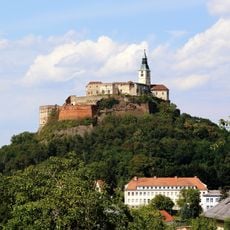
The complex sits at the eastern edge of the old town, where Hauptstraße meets Pater-Gratian-Leser-Straße and Clusiusweg, below the castle hill. The open east part of the former Anger in front of the main portal serves as the church forecourt. The eastern city gate that once adjoined the monastery to the south was demolished in the 20th century for traffic reasons.
The monastery library holds around 7,000 works, among them the Stirpium Nomenclator Pannonicus, written by Carolus Clusius and printed by Johannes Manlius, and Bartholomäus Metlinger's Regiment der jungen Kinder, the second-oldest paediatric work in world literature. The church, raised to Basilica minor in 2013, is also the burial place of the beatified Ladislaus Batthyány-Strattmann.
The community of curious travelers
AroundUs brings together thousands of curated places, local tips, and hidden gems, enriched daily by 94,092 contributors worldwide.