Michaelerplatz, square in Vienna, Austria
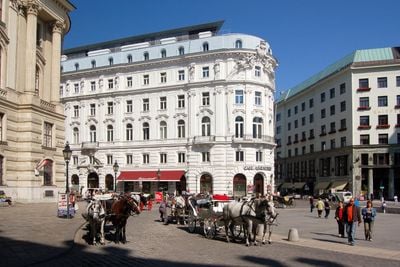
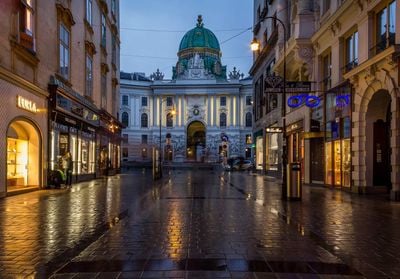
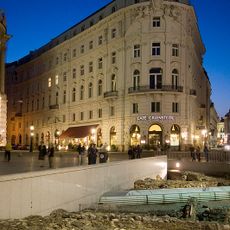
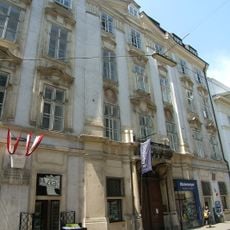
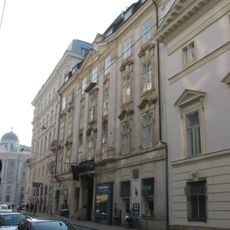
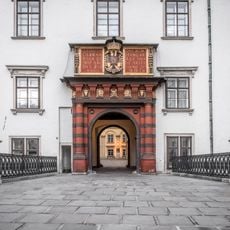
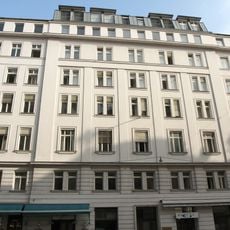
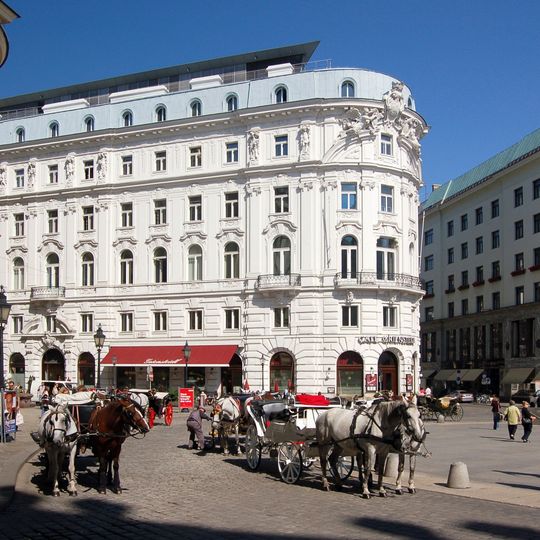
Michaelerplatz is a pedestrian square at the edge of the Hofburg Palace complex in central Vienna. It is paved with cobblestones and framed by historic facades, with an open archaeological pit in the middle showing old walls and foundations.
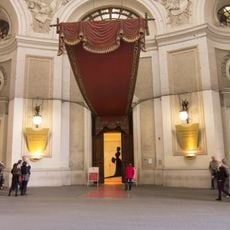
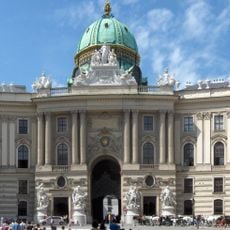
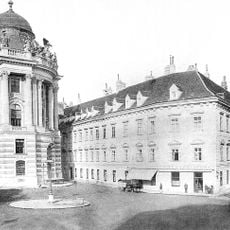
The square's site lay outside the Roman legionary camp of Vindobona, where four Roman houses from the 2nd to 5th centuries AD were found. In the Middle Ages it belonged to the Witmarkt, later Kohlmarkt. Joseph Emanuel Fischer von Erlach planned the baroque square around 1725, but the Michaelertrakt was only completed in 1889–1893 by Ferdinand Kirschner after the Altes Burgtheater was demolished. The central excavation, open since 1991, displays Roman house foundations.
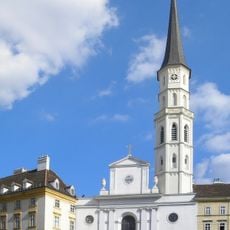
The square is named after St. Michael's Church, founded in 1221 by Babenberg Duke Leopold VI for the court servants and citizens living around the Hofburg. The church, rebuilt with a Neoclassical facade, stands between the two Michaelerhaus buildings; the Kleines Michaelerhaus housed the "Michaeler Bierhaus" tavern from 1749 for more than two centuries.
Michaelerplatz is a junction of Kohlmarkt, Herrengasse, Schauflergasse and Reitschulgasse, and since 1927 Vienna's first car roundabout circles the excavated Roman remains in the middle. Cross with care at the marked crossings, and approach the open excavation, framed by Hans Hollein, from the surrounding pavement.
The excavation opened in 1991 is a permanent outdoor branch of the Wien Museum, framed by architect Hans Hollein. Four Roman houses from the 2nd to 5th centuries AD were found here, thought to have formed an entertainment quarter with a small shop.
The community of curious travelers
AroundUs brings together thousands of curated places, local tips, and hidden gems, enriched daily by 93,525 contributors worldwide.