Dreidärrischen-Höhle, Natural cave in Gaaden, Austria.
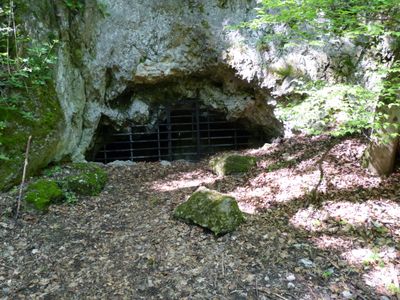
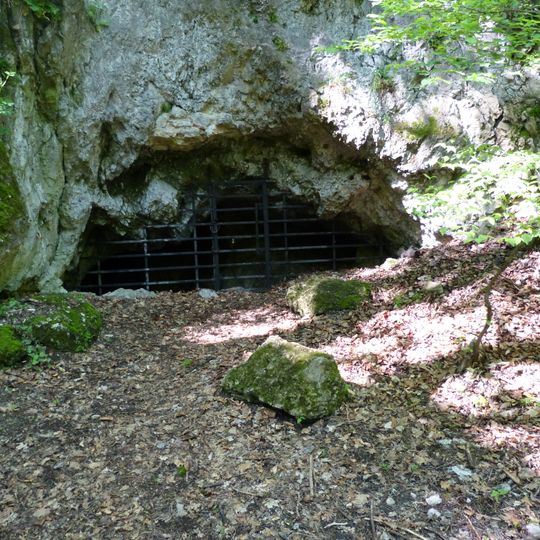
The Dreidärrischen-Höhle is a natural cave in the Gaaden area that stretches roughly 230 meters with a vertical rise of about 19 meters. The limestone formations were shaped by natural erosion processes over millions of years.
The cave was opened as a show cave on 23 August 1926 with electric lighting and an artificial entrance; in its first month more than 5,000 visitors paid 17 to 19 million kronen. Excavations show it was visited in the Hallstatt period as a sacrificial site for earth and death cults, not as living space. From 1927 a small shelter hut, the Bergheim, stood on a terrace before the natural entrance until it was closed in 1935 after a legal dispute and burned down after World War II.
The name Dreidärrischenhöhle refers to the three rocks above the entrance, said to resemble petrified people who are deaf ("därrisch" in dialect). A second explanation holds that the rock face around the cave returns no echo. Earlier names were Saulucke, Niklashöhle and Fuchsloch.
Access to the cave has been closed since 2000 to protect its fragile environment and habitats. This allows several protected bat species to live undisturbed within the cavern.
The cave's name refers to three rock pinnacles above the entrance that resemble petrified people who, in local legend, are deaf ("därrisch"); another explanation says the rock face around the cave returns no echo. Excavations show the cave was visited in the Hallstatt period and served not as living space but as a sacrificial site for earth and death cults.
The community of curious travelers
AroundUs brings together thousands of curated places, local tips, and hidden gems, enriched daily by 93,856 contributors worldwide.