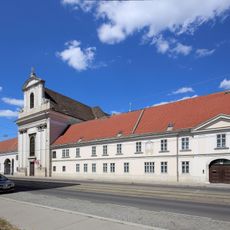
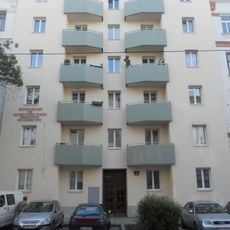
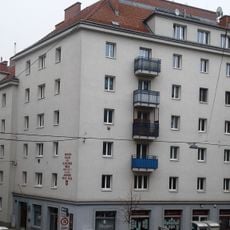
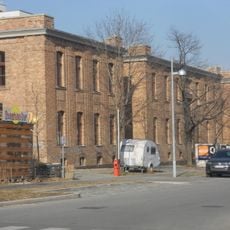
Wildganshof, Protected residential complex in Landstraße, Austria.
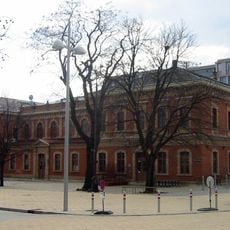
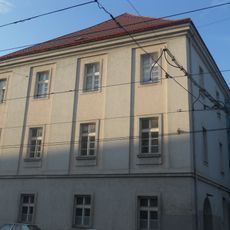
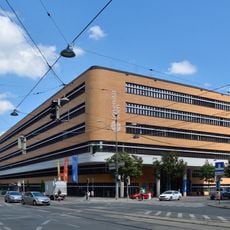
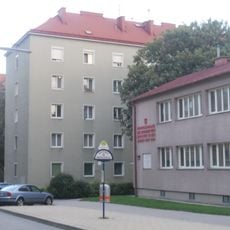
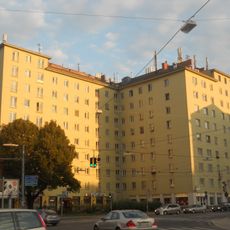
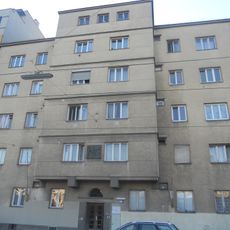
Wildganshof is a municipal housing estate in Landstraße, Vienna, built from 1931 to 1933 to plans by Viktor Mittag and Karl Hauschka, originally with 829 flats. Long, closed facades give the exterior a defensive look, broken only at two diagonally opposite points. Inside are broad green courtyards, and the west facade on Landstraßer Hauptstraße carries a terracotta relief of a ploughing farmer by Alfons Riedel.
The complex was built between 1931 and 1933, marking the final major construction project of the Red Vienna movement before Austria's shift toward a corporate state. It emerged during a period of social upheaval and ambitious urban development.
The name honours Anton Wildgans, the poet and Burgtheater director born in the 3rd district, who died in 1932, a year before the complex opened. In one courtyard stands a bust of him made by Alfons Riedel, the sculptor also responsible for the terracotta relief "Pflügender Bauer" on the Landstraßer Hauptstraße facade. That relief was installed under National Socialism; its inscription, a Hitler quotation, was later removed or painted over.
The complex lies along Landstraßer Hauptstraße, with the two diagonal facade gaps marking where a planned rapid transit line was to cut through. The courtyards are open to walkers, and the Anton Wildgans bust stands in one of them. The terracotta relief is on the western facade facing the main street.
The two diagonal gaps in the outer facades mark where a planned rapid transit line was to cut straight through the Wildganshof; the railway was never built, so the breaks remain as unfinished seams in the block.
The community of curious travelers
AroundUs brings together thousands of curated places, local tips, and hidden gems, enriched daily by 93,557 contributors worldwide.