Steinwandklamm, gorge in Lower Austria, Austria
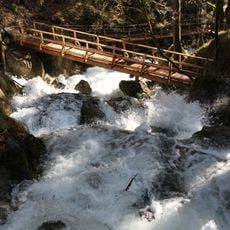
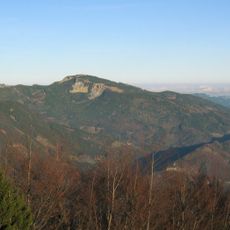
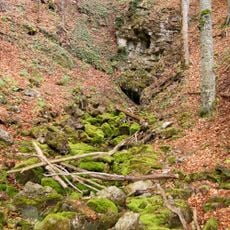
Steinwandklamm is a gorge near Weißenbach an der Triesting on the border of Furth an der Triesting and Muggendorf, cut by a stream rising on the Almesbrunnberg (1079 m). The lower entrance lies at about 550 m in the Steinwandgraben near the Jausenstation Reischer; after roughly 500 m the Rudolf-Decker-Steig branches off to the left, and after another 150 m the main path turns left up to the Türkenloch, a passage cave about 20 m long. Beyond it a steeper rock passage secured with wire ropes leads out onto a plateau at about 750 m.
The gorge was made accessible by the Austrian Tourist Club (ÖTK) in 1884 and opened on 8 June that year in the presence of more than 600 guests from Vienna. The Rudolf-Decker-Steig, a via ferrata with about 150 metres of elevation gain, was built by the ÖTK in 1927. The ÖTK's Triestingtal section managed the gorge until the end of 2010, after which Franz Singer took over with support from the municipality of Furth and the province of Lower Austria.
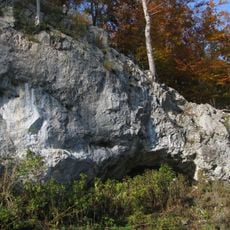
The Türkenloch passage cave takes its name from a legend of the 1683 Turkish siege: locals are said to have hidden inside, been betrayed by the smoke of their cooking fires, and been captured or killed. Excavations in 1981 found coins, pottery shards and bones, which are said to support the story.
The trail is steep with sections that become slippery when wet, especially after rain or snowmelt, so sturdy hiking shoes are essential. You should be in reasonable physical shape to complete the full route without difficulty.
The Türkenloch is a passage cave about 20 metres long, reached by a branch of the main path at the end of the gorge. Its name recalls a legend from the 1683 Turkish siege: locals hiding inside were said to be betrayed by the smoke of their cooking fires. Excavations in 1981 found coins, pottery shards and bones.
The community of curious travelers
AroundUs brings together thousands of curated places, local tips, and hidden gems, enriched daily by 93,939 contributors worldwide.