Gräberfeld von Frög, Archaeological grave field in Rosegg, Austria.
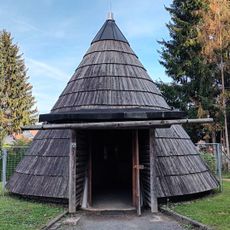
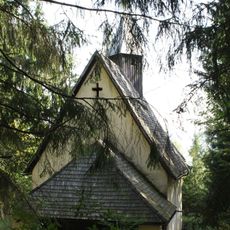
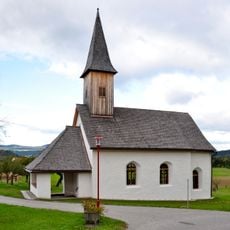
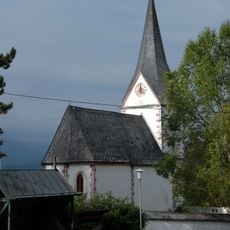
The Gräberfeld von Frög is a Hallstatt-period cremation cemetery in a former loop of the Drau near Rosegg, Carinthia. It holds about 600 burial mounds, used from roughly 800 to 600 BCE, with stone settings, stone chambers, wooden structures and flat graves. The Keltenwelt Frög museum stands within the cemetery area.
The grave field was in use from about 800 to 600 BCE, during the Hallstatt period, with roughly 600 burial mounds holding cremation burials. The oldest horizon, dated to the 8th century BCE, contains conical-headed needles linking the site to Krain and Kleinklein. Tumulus 70, from the older Hallstatt period, held an iron socketed axe with gold inlay, a long spearhead and a bronze bridle in eastern style.
Women's graves at Frög are often marked by bronze spindles, men's graves usually by one or two axes and one or two spears. Some richly furnished burials are called those of clan chiefs. The lead figurines, riders, stallions and birds, were pressed in open moulds and glued onto pottery.
The grave field lies in a former loop of the Drau near Frög in the municipality of Rosegg. The Keltenwelt Frög, built directly on the site, presents the finds, including the lead wagon, and explains the Hallstatt-period burials. The mounds lie in open terrain, so sturdy footwear is useful; the museum gives orientation before a walk across the field.
The burial goods show that burial practices and social structures changed significantly over the centuries. These changes mark different settlement phases and population shifts in the region.
The community of curious travelers
AroundUs brings together thousands of curated places, local tips, and hidden gems, enriched daily by 94,026 contributors worldwide.