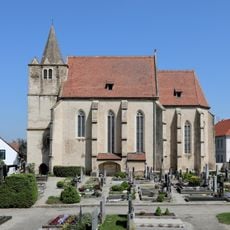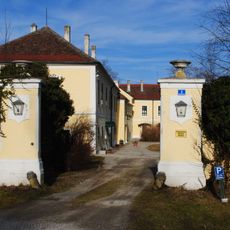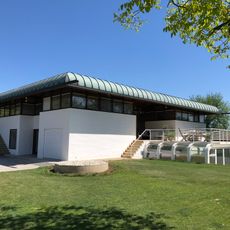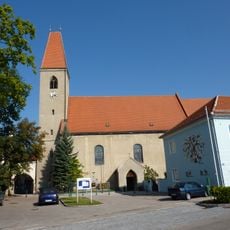
Schloss Grafenegg, Historical castle museum in Lower Austria.
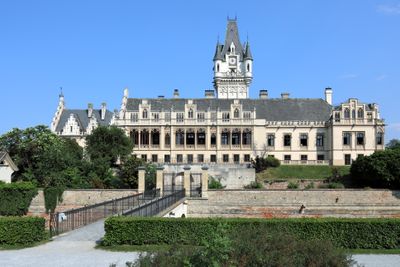
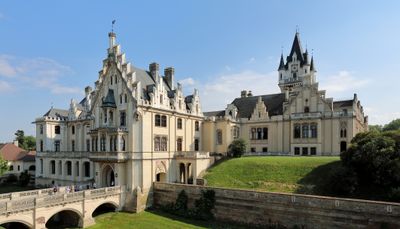
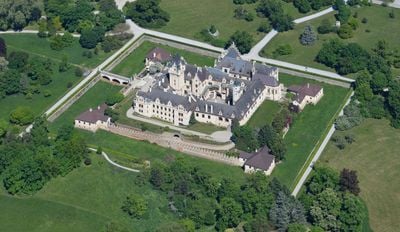
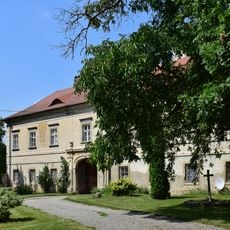
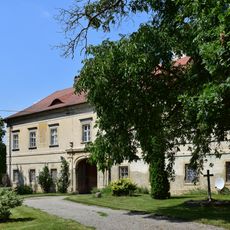
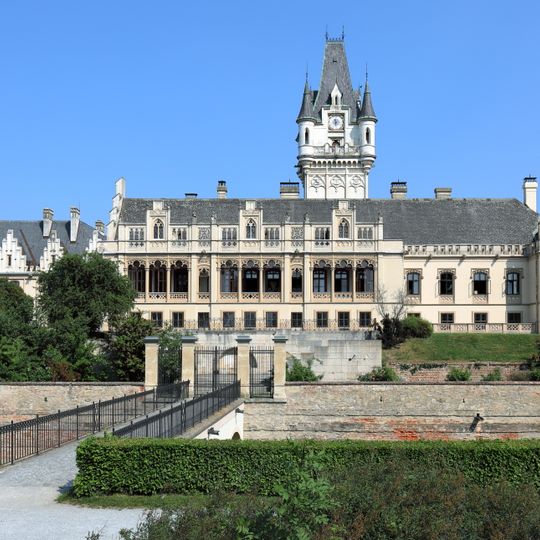
Schloss Grafenegg is a four-winged castle around an inner courtyard in Grafenegg, Lower Austria. Its 19th-century redesign by Leopold and Hugo Ernst added stepped gables, arcades and neo-Gothic Tudor facade decoration, while the interior by Ludwig Wächtler is largely Neo-Renaissance. A slender late Gothic tower stands on the east side, and the north entrance is reached over an 1857 bridge.
The castle was founded in 1294 and stands as one of the region's oldest structures. In the 19th century it underwent major renovation under Count Breuner-Eckevoirt, who drew inspiration from English Tudor architecture.
The chapel in the north wing, consecrated in 1853, holds a late Gothic winged altarpiece from 1491 whose shrine figures show the Coronation of the Virgin. The south wall of the chapel courtyard displays the coats of arms of all owners of Grafenegg up to Count August Ferdinand Breuner-Enckevoirt. The Rittersaal upstairs, finished in 1851, has a coffered ceiling and three bay windows with coats of arms in the glazing.
The castle is entered from the north over the 1857 castle bridge, through the neo-Gothic gate building of 1856–1858; the chapel lies to the left, the main staircase to the right. The 19th-century conversion moved counterclockwise from the north wing, so the four wings around the inner courtyard follow that order. Restoration began in 1967 and the castle was opened to the public.
The chapel in the north wing holds a late Gothic winged altarpiece from 1491 whose shrine figures show the Coronation of the Virgin. The south wall of the chapel courtyard displays the coats of arms of every owner of Grafenegg up to Count August Ferdinand Breuner-Enckevoirt.
The community of curious travelers
AroundUs brings together thousands of curated places, local tips, and hidden gems, enriched daily by 92,782 contributors worldwide.