Charek monastery, Armenian monastery in Gadabay District, Azerbaijan
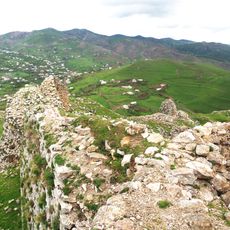
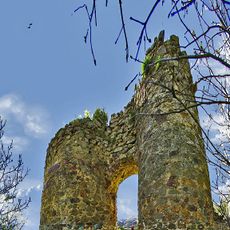
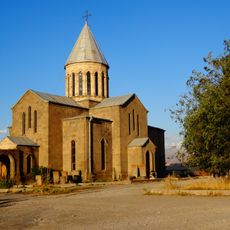
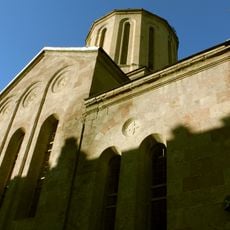
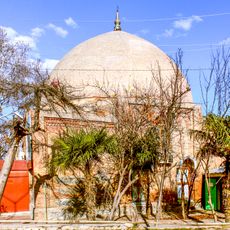
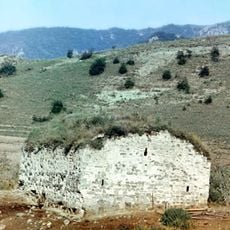
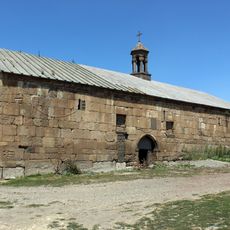
Charek monastery stands on the left bank of the Shamkor River at about 1070 metres, 3.5 km upstream from where the Getabek tributary joins it. Its Church of the Holy Mother of God, built in the early 17th century, is a three-nave basilica of rough and roughly dressed stone with lime mortar, measuring 17.28 by 9.72 metres. A gavit added in 1684 uses smoothly cut yellowish-brown stone, and a two-storey bell tower with an eight-column rotunda was built in 1659.
Bishop David, a graduate of Tatev's Metz Anapat and a member of the Gharamaniants family, founded the monastery in the 1610s and led it until 1643, when he was buried beside the Church of the Holy Mother of God he had built. His successor Sargis (1643–1671) added the bell tower in 1659, and Nerses built the gavit in 1684. In 1240 the Albanian catholicosate had moved from Charek to Gandzasar.
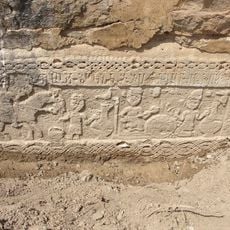
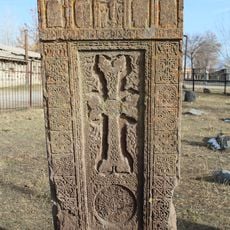
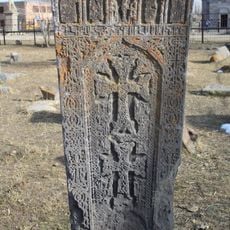
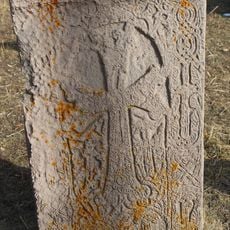
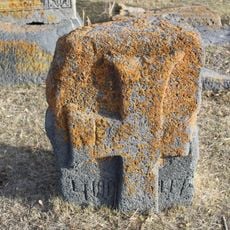
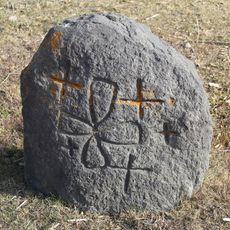
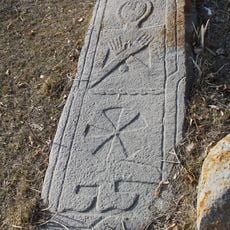
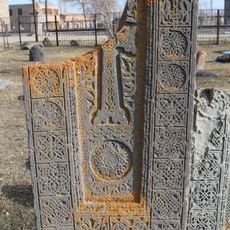
The monastery served as a center for manuscript copying and learning, with stone inscriptions still visible that record the lives of the monks who lived here. These carved records reveal how important this place was as a hub of knowledge and spiritual activity.
The monastery is located about 7 kilometers southeast of the district center and can be reached by following local roads through hilly terrain. Good hiking shoes are recommended since the area is elevated and uneven, and visitors should allow time to explore the entire complex.
A Russian researcher documented in the mid-1800s that beehives were kept within the monastery grounds as part of daily operations. This detail reveals how the community managed food production and lived self-sufficiently alongside their religious duties.
The community of curious travelers
AroundUs brings together thousands of curated places, local tips, and hidden gems, enriched daily by 94,478 contributors worldwide.