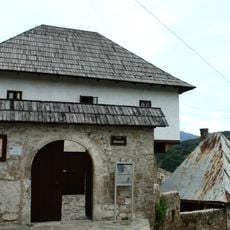
Walled city of Jajce, Medieval fortress complex in Jajce, Bosnia and Herzegovina
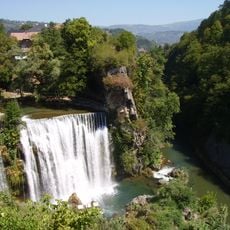
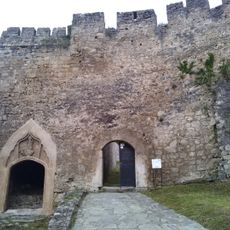
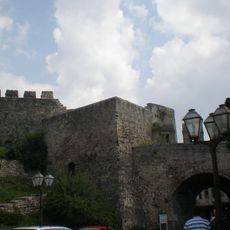
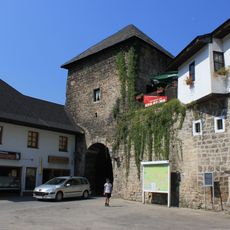
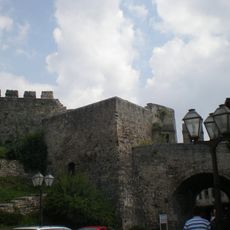
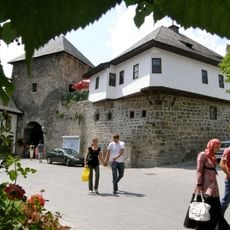
The Walled City of Jajce is a medieval fortified nucleus whose citadel stands on Hum hill at 470 m, above the confluence of the Pliva and Vrbas rivers. Its ramparts run about 1,300 metres around roughly 11,200 square metres, linking the Great Northern and Great Southern Bastions, the Medvjed-kula watchtower, and the Banja Luka and Travnik gatehouses. The main portal carries the coat of arms of the Kotromanić dynasty.
The site became the capital of independent Bosnia in the 14th century and served as the realm's main stronghold for over 200 years. It fell to Ottoman forces in 1527, marking the end of medieval Bosnian royal rule.
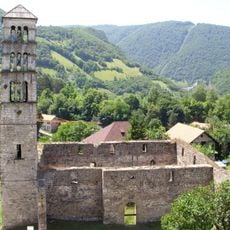
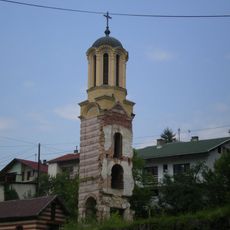
The citadel portal carries the coat of arms of the Kotromanić dynasty, marking the town's role as a royal seat. Queen Catherine restored Saint Mary's Church, today the oldest church in Jajce. The Franciscan monastery of Saint Luke was completed in 1885, and the site is proposed for UNESCO World Heritage listing as part of Jajce's natural and architectural ensemble.
The walls run about 1,300 metres around the hilltop, and a walkable path links the Great Southern Bastion with the Great Northern Bastion. The northern rampart passes the Clock Tower, Mračna kapija, Velika tabija, Džikovac and Papaz towers to the Banja Luka gatehouse; the western wall descends from the citadel past Medvjed-kula to the Travnik gatehouse. The citadel stands at 470 m above sea level, so allow time for the climb.
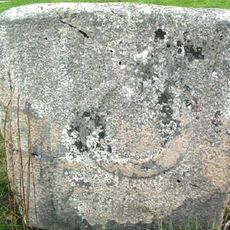
Carved into one entrance gate is the coat of arms of the Kotromanic dynasty, a rare emblem from the late medieval era. This carving marks the site as the final royal residence before the kingdom fell.
The community of curious travelers
AroundUs brings together thousands of curated places, local tips, and hidden gems, enriched daily by 93,376 contributors worldwide.