Beersel Castle, Water castle in Beersel, Belgium
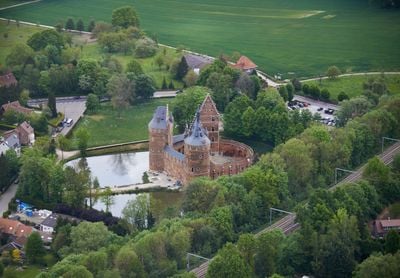
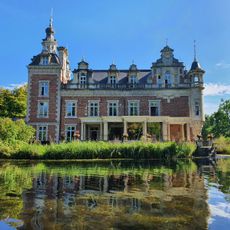
Beersel Castle is a medieval water fortress in Belgium's Brabant region with three large circular towers made of brick. The structure is surrounded by a moat that holds water from nearby streams and protected the entire building.
Godefroid of Hellebeke, seneschal of Brabant, built the castle between 1300 and 1310 to guard the duchy's border against Hainaut. In 1356 Louis of Male, Count of Flanders, burned it during the Brabant succession war. Brussels troops besieged it in 1488 and breached it in 1489; Maximilian then forced the city to pay for its restoration, carried out between 1491 and 1508.
The castle's name comes from the lords of Beersel, whose line began with Godefroid de Hellebeke, seneschal of Brabant. The Wittem family held it for seven generations until the male line died out in 1591. The castle appears in a Bob et Bobette album by Willy Vandersteen, Le Trésor de Beersel, and the interior served as a model for the castle in Tintin's L'Île Noire.
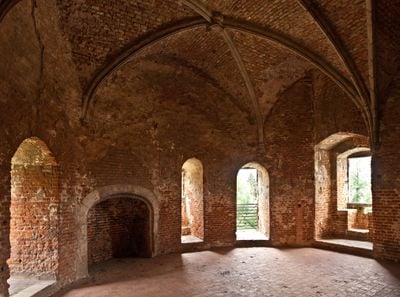
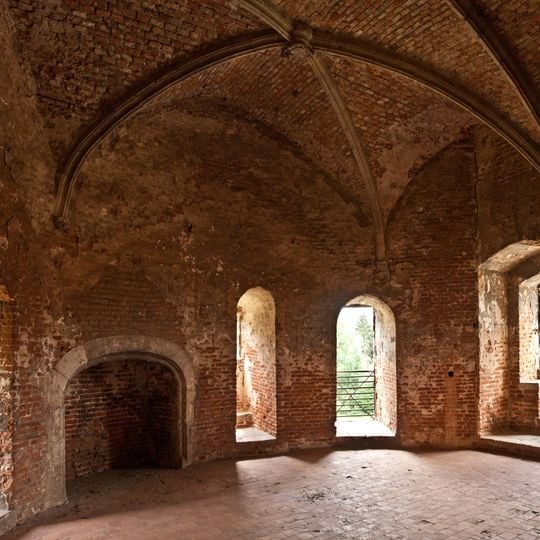
The castle is reached by a wooden bridge over the moat, and the gate keeps a working portcullis mechanism from the late Middle Ages. Inside, the ground floor is paved with flat reddish tiles and the vaulted rooms are dim, so allow time to look up at the brick vault and pale stone ribs. The walkway between the towers holds two vertical oubliettes.
In 1818 the castle was briefly leased to a cotton manufactory under King William I, an enterprise that met with little success. Victor Hugo visited in 1877 and wrote a short poem about the ruin, said to have been composed standing in the first-floor room that once housed the portcullis mechanism.
The community of curious travelers
AroundUs brings together thousands of curated places, local tips, and hidden gems, enriched daily by 93,416 contributors worldwide.