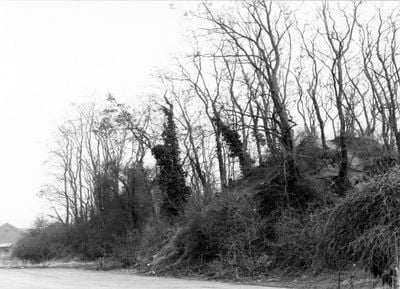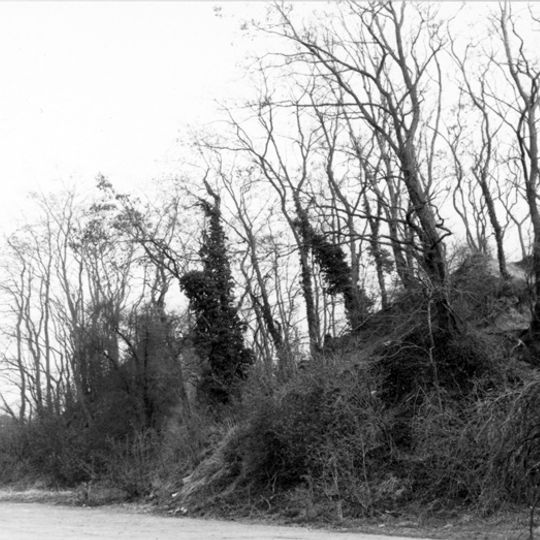
Drie Tommen, Gallo-Roman burial mounds in Grimde, Tienen, Belgium
Drie Tommen consists of three earthen burial mounds standing 8 to 12 meters high and covered with trees and dense vegetation. The mounds form an ensemble of ancient burial sites set within open countryside.
The three tumuli were raised in the late 2nd century AD as a burial monument for Marcus Probius Burrus, a leading Gallo-Roman of the civitas Tungrorum. The outer mounds each held a wooden burial chamber; the eastern one contained a gold rod inscribed MPRO BIVS BVR RVS, the western one a cameo and a gold ring reading CONCORDI COMMVN. The middle mound held only a wooden post, perhaps the base for a statue. Baron Alfred de Loë excavated the site on 10 October 1892.
The three mounds reveal how people living here nearly 2,000 years ago buried their dead and which objects they valued most. Visitors can observe how burial practices reflected both Roman and local traditions.
The site is easy to access and can be reached on foot, with clear views of all three mounds from the surroundings. Comfortable footwear is recommended since the ground is natural and can be muddy in places.
The 1892 dig under Baron Alfred de Loë found a gold rod inscribed MPRO BIVS BVR RVS, read as Marcus Probius Burrus, the man buried in the eastern mound. The western mound held a sardonyx cameo of a young man, once taken for Augustus but now identified as Gaius Vipsanius Agrippa, and a gold ring inscribed CONCORDI COMMVN.
The community of curious travelers
AroundUs brings together thousands of curated places, local tips, and hidden gems, enriched daily by 94,357 contributors worldwide.