Geosite Goudberg, Petrified forest in Hoegaarden, Belgium
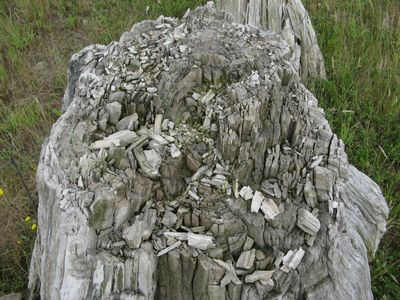
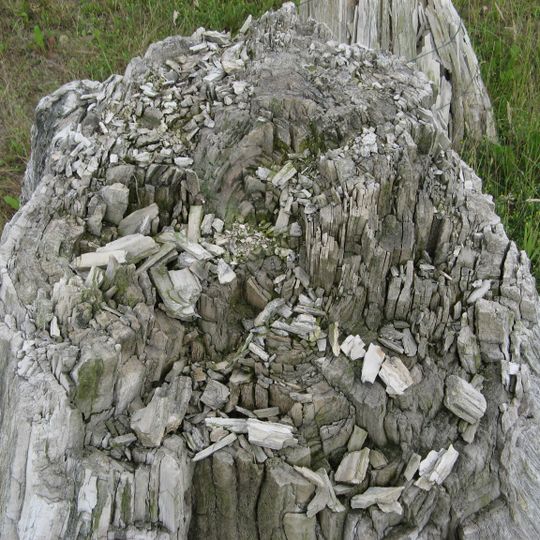
Geosite Goudberg is a location in Hoegaarden containing fossilized tree trunks from around 55 million years ago that have retained their internal wood structure. These fossils formed through silicification, a natural process where minerals gradually replaced the original material over time.
Construction crews accidentally discovered the petrified trees in 1970 while building the E40 highway. The finds were then systematically studied and formally protected as a geosite beginning in the early 1990s.
The site reveals what the region looked like millions of years ago and helps visitors understand the subtropical conditions of the Paleocene period. Walking through allows you to see how different Europe's climate once was and what kinds of plants thrived in this area.
The petrified trunks were dug out of the clay and silt layer in March 2000. Two large trees went to the Royal Belgian Institute of Natural Sciences in Brussels and another large specimen to Museum Naturalis in Leiden, so the park itself is an educational exhibition park rather than a bare excavation. Allow time to read the displays.
The collection consists mainly of swamp cypress trees, which are not found in such large numbers in this form anywhere else in Western Europe. These trees were well adapted to the warm, wet climate of that time and reveal much about the ecology of the region millions of years ago.
The community of curious travelers
AroundUs brings together thousands of curated places, local tips, and hidden gems, enriched daily by 94,918 contributors worldwide.