Groot Vleeshuis, Medieval guild house and market hall in Ghent, Belgium.
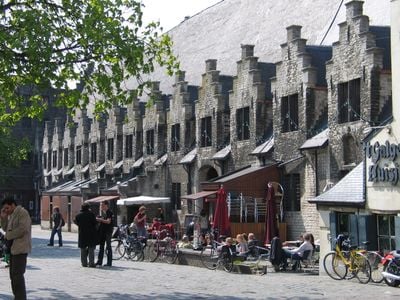
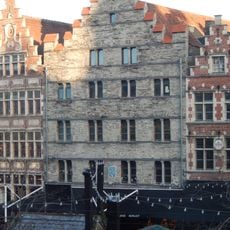
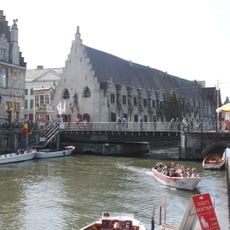
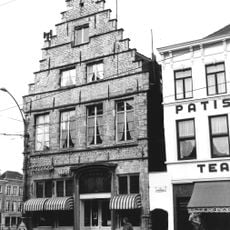
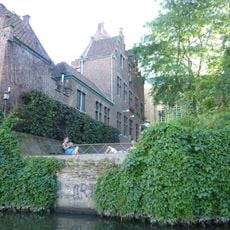
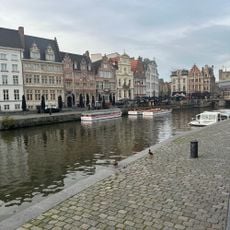
The Groot Vleeshuis is a Gothic meat hall built of grey stone, its long facade along the Leie pierced by rows of narrow pointed-arch windows with stepped gables between them, under a vast steep roof of brownish-grey tiles. The north facade on Kleine Vismarkt ends in a stepped gable topped by a lion, with a niche holding the 17th-century Virgin with the inkwell.
A wooden meat hall stood on this spot from the mid-13th century and was first recorded in 1251; the city accounts mention it in 1332-1333. Around 1400 it was dilapidated, so the butchers' guild had city architect Gillis De Suttere build the present stone hall from 1407 to 1419, with one meat stall to rent per guild member. A chapel of Saint Hubert was added in 1446-1448, and the hall stayed in use as a meat market until 1884.
This protected monument exemplifies medieval craftsmanship and stands as a testament to the guild system that regulated trade and commerce in medieval Ghent, symbolizing the city's municipal authority.
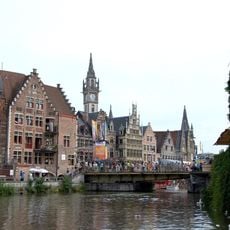
The building sits between the Groentenmarkt and the Leie, with its western facade along the Vleeshuistragel quay and its northern side on the Kleine Vismarkt. Renovation began in August 2024 and is now scheduled to run until 2027, so parts may be closed off. The medieval vaulted fish passages under the building are still visible from the Leie side.
The structure features a 17th-century statue of the Virgin Mary with an inkwell, known as 'La Vierge à l'encrier', positioned in a Gothic niche on the northern facade.
The community of curious travelers
AroundUs brings together thousands of curated places, local tips, and hidden gems, enriched daily by 93,461 contributors worldwide.