Sint-Donatus Park, Urban park in Leuven, Belgium.
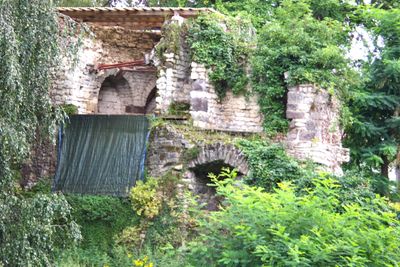
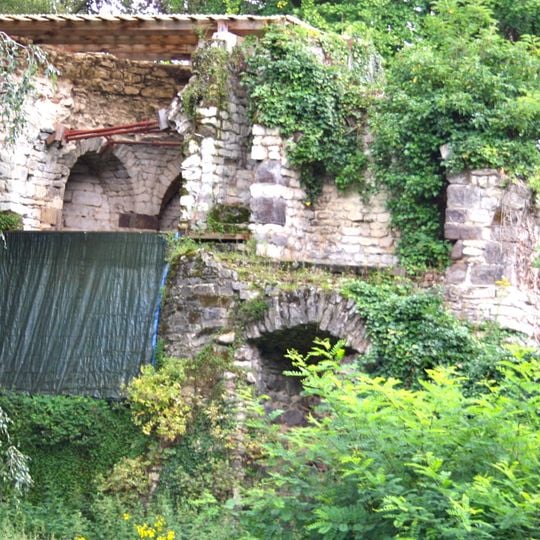
Sint-Donatus Park is a 2.4-hectare public garden in central Leuven, laid out between 1869 and 1875 in English landscape style with curving paths, lawns and mature trees. Within it stand a fragment of Leuven's first city wall and two towers of sandstone and ironstone, the Sint-Donaastoren among the best preserved. A cast-iron and wood music kiosk of 1898 by city architect Eugène Frische stands in the grounds.
The park was laid out between 1869 and 1875 to designs by landscape architects Jacques Rosseels and Julien Goyers, with later contributions from Louis Fuchs. Sections of Leuven's 12th- and early 13th-century first city wall were kept as garden features instead of being removed. The landscape has been protected as a historic townscape since 1978, and the park was relaid between 1993 and 1998.
Locals call the park "Gielenhof", after the guilds (gilden) that once used the grounds. Its half-round music kiosk of cast iron and wood, designed by city architect Eugène Frische in 1898, replaced an earlier Chinese kiosk of 1835. A bust of poet Albert Giraud by Victor Rousseau was inaugurated here in 1935.
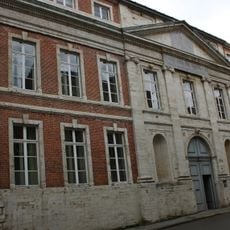
The park lies between Charles Deberiotstraat, Vlamingenstraat and Tiensestraat, and its main entrance since 1957 is the classicist stone gate of the former Van de Wynckele College, moved here from Tiensestraat. Paths curve through the English landscape layout, so expect uneven ground after rain.
The Sint-Donaastoren, the best-preserved element of Leuven's first city wall, stands inside the park; the wall itself was raised around the mid-12th century from sandstone and ironstone. Only a small number of the original towers survive.
The community of curious travelers
AroundUs brings together thousands of curated places, local tips, and hidden gems, enriched daily by 93,676 contributors worldwide.