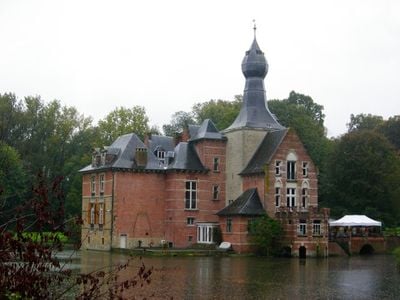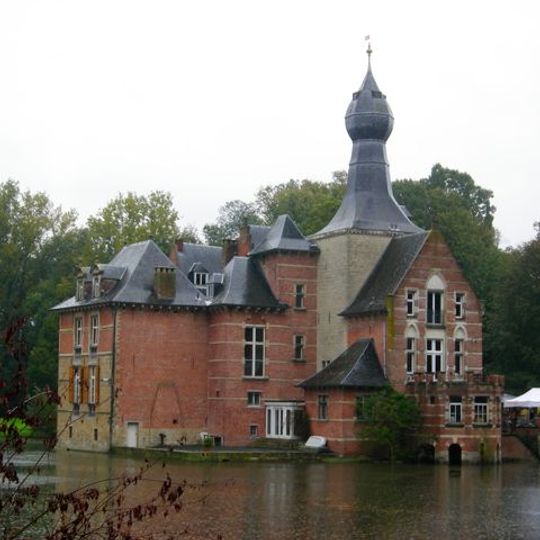
Rivieren Castle, Gothic castle in Ganshoren, Belgium.
Rivieren Castle is a Gothic stone structure in Ganshoren surrounded by a 10-hectare park with a medieval moat and lake. The building is framed by water features that form a protective ring around its architectural elements.
Construction of the castle began in the 12th century and continued through multiple phases until the 19th century. This long building history shows how different architectural approaches were layered into the final structure.
The castle's name comes from the lords of Rivieren of Aerschot, who held it in the 12th century. In 1638 François II de Kinschot, finance councillor to Archdukes Albert and Isabella, turned the estate into a pleasure residence, and on 9 November 1659 it was raised to the County of Saint-Pierre Jette. The castle and park were listed in 1983.
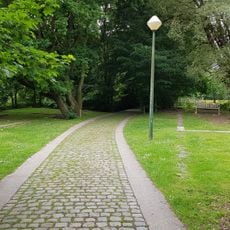
The castle and its 10-hectare Albert I Park are only occasionally open to the public, notably during the Heritage Days and festive events. The grounds lie in Ganshoren, in the north-west of the Brussels-Capital Region, beside the pond that survives from the medieval moat. The building itself is used for conferences, receptions and exhibitions.
From 1975 to 1979 the castle housed a team of scientists behind the "sniffing planes" affair, a scandal over alleged airborne oil detection. The last chatelaine, Elisabeth de Botmiliau, widow of Albert de Villegas de Saint-Pierre Jette, died at Ganshoren in 1977; her sons then sold the estate to a Swiss company that restored it for events and seminars.
The community of curious travelers
AroundUs brings together thousands of curated places, local tips, and hidden gems, enriched daily by 93,446 contributors worldwide.