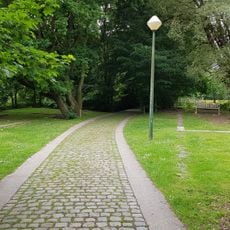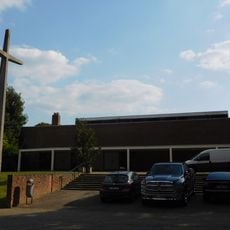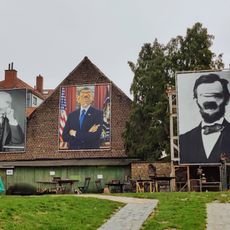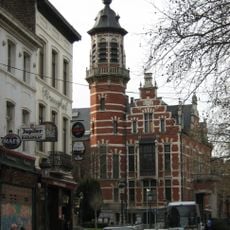
Dieleghem Abbey, Former abbey and museum in Jette, Belgium.
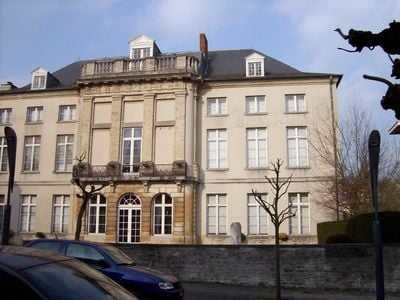
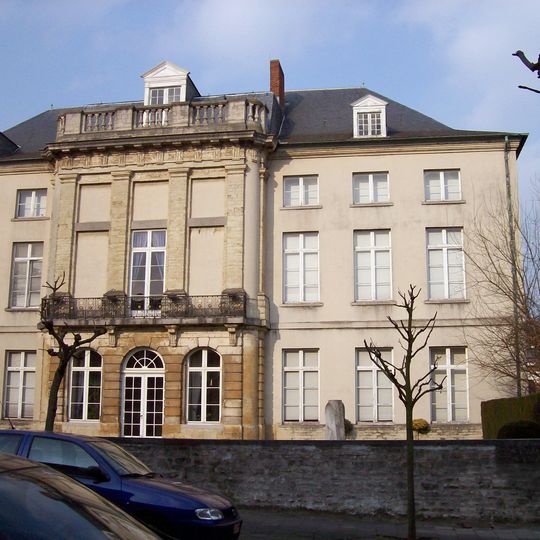
Dieleghem Abbey is a former monastic complex in Jette where the main abbot's residence, built in 1783 from local sandstone, stands as the most visible reminder of its past. This classical building now functions as a museum space that occupies the same location the religious community once used.
A charter of Gaucher, Bishop of Cambrai, backed by Onulphe, lord of Wolvertem, records the community of Augustinian canons in 1095; it became an abbey in 1106 and moved to Dieleghem around 1140, adopting the Premonstratensian rule. Its mitred abbots sat in the States of Brabant from 1532. In November 1796 the canons were evicted and deported to an island off Brittany, and the abbey was looted and demolished, leaving only the abbot's residence.
The abbey's motto, Diligam te Domine, and its arms showing a pelican feeding its young with its own blood, expressed the community's ideal of sacrifice. The canons ran fishponds whose surplus catch was sold at market, and they received the poor and pilgrims. The abbot's former residence now holds the museum of the County of Jette.
The site is located at Rue Jean Tiebackx 14 in Jette and visitors can explore the museum collections through organized tours of the buildings. Planning ahead for opening hours and available tours will help make the most of your visit to this heritage location.
The limestone quarried here, a grey-brown stone called Baelegem stone, was used beyond the abbey: it built the north tower of the Cathedral of Saints Michael and Gudula in Brussels and the former Jesuit church on Place de la Justice. About ten open-air quarries were recorded; when they flooded and collapsed at the end of the 18th century, the monks planted beeches on the unusable ground.
The community of curious travelers
AroundUs brings together thousands of curated places, local tips, and hidden gems, enriched daily by 94,361 contributors worldwide.