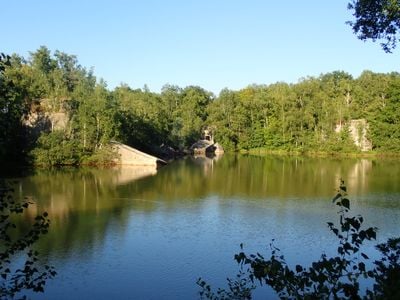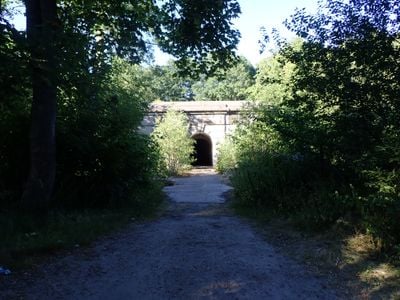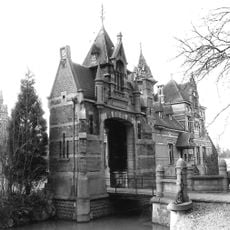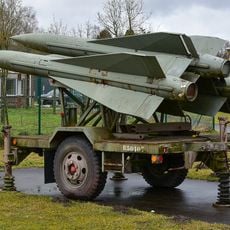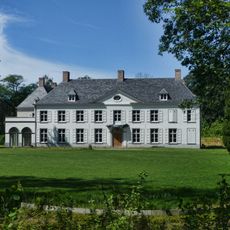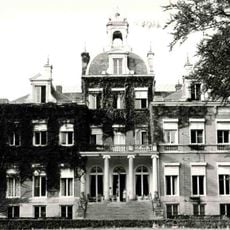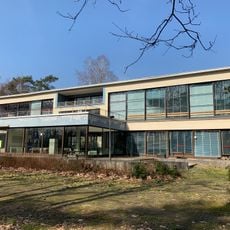
Fort van Brasschaat, Military fortification in Brasschaat, Belgium.
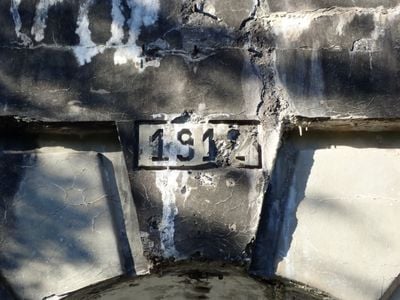
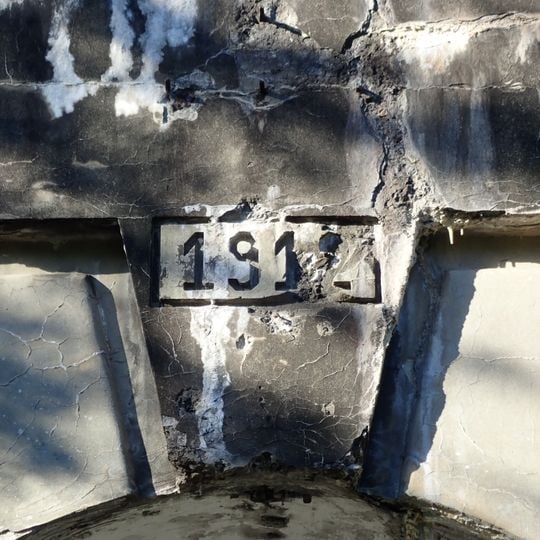
Fort van Brasschaat is a second-order fort of the outer ring of the Antwerp Stelling, built between 1909 and 1912. Its moat defence relied on attached revers caponnières, gun positions placed ahead of the main front and linked to it by a concrete corridor. The main armament sat under armoured cupolas: one with two 15 cm guns, two for 12 cm howitzers and four for 7.5 cm guns, supported by two armoured observation clocks. A concrete face bears the raised numerals 1912.
The fort was built between 1909 and 1912 as part of Belgium's defensive line around Antwerp to protect against potential invasions. It reflected the military concerns of the era and represented advances in fortification engineering.
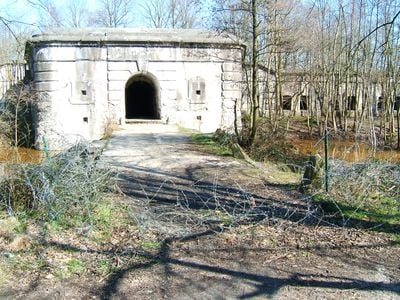
The fort is military property and closed to the public, so its concrete walls and the numeral "1912" recessed above the entrance are seen only from outside. Its name comes from the Stelling van Antwerpen, the outer ring of forts approved by the law of 30 March 1906, of which Brasschaat formed part.
The fort is military property and is not accessible to visitors; there are no guided tours and no entry. It stands in Brasschaat as part of the outer ring of the Antwerp fortress belt, and the site can only be viewed from outside.
In the winters of 2008 and 2009, more than 800 bats of seven species were counted inside the fort, the third-highest total among the forts of the Antwerp belt after Fort Oelegem and Fort Steendorp. Brandt's bat and the pond bat are present in sizeable populations. The fort is military property and closed to the public.
The community of curious travelers
AroundUs brings together thousands of curated places, local tips, and hidden gems, enriched daily by 95,031 contributors worldwide.