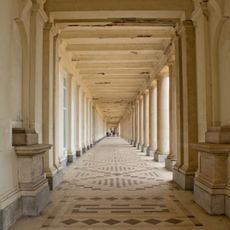
Drie Gapers, Architectural structure near the beach in Ostend, Belgium.
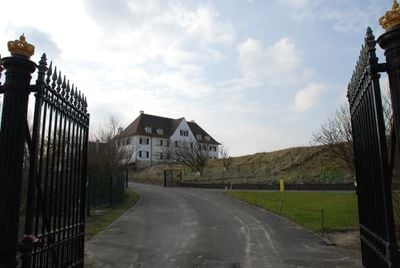
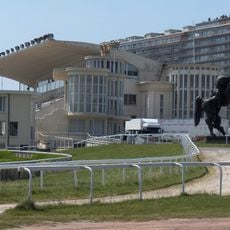
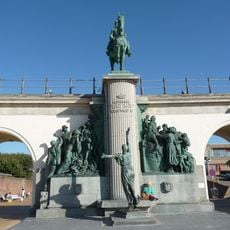
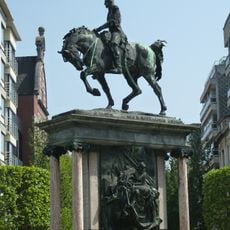
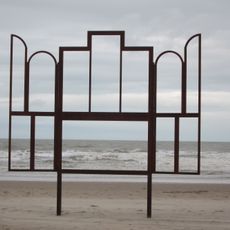
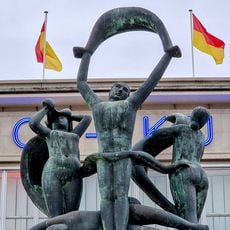
Drie Gapers is a bridge-like structure joining the Royal Villa to the roof of the Royal Galleries, with three large passages; the middle one was closed to carry the bronze equestrian statue of Leopold II, unveiled on 19 July 1931. The statue stands on a high pedestal facing the North Sea, flanked by two sculpture groups: "Gratitude of the Congolese People" on the left and "Homage of the Ostend Fishermen" on the right. The architectural frame in Art Deco style is by Antoine Courtens, the statue by his brother Alfred Courtens.
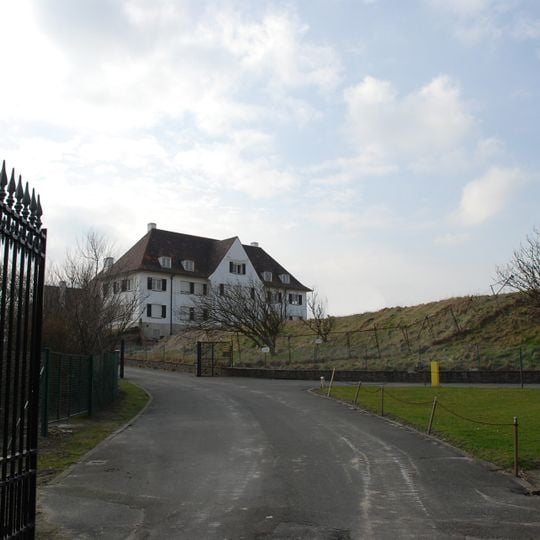
The site originally held a royal residence from 1873, destroyed during World War II. This replacement structure rose from 1953 to 1956 as part of Ostend's post-war reconstruction.
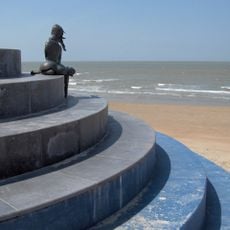
The middle passage was walled up to carry Alfred Courtens's bronze equestrian statue of Leopold II, unveiled on 19 July 1931; the flanking groups show the "Gratitude of the Congolese People" and the "Homage of the Ostend Fishermen". Ostend residents joke that the third gaper is you. In 2004 a hand was sawn off the African figure in the left group.
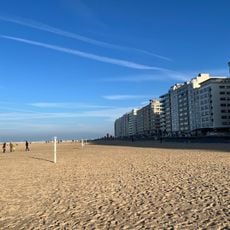
The structure sits directly at beach level and functions as a public walkway between buildings. You can move freely through the passages, and the arched openings help orient you toward the waterfront and surrounding attractions.
The central opening was walled up to carry the equestrian statue of Leopold II, unveiled on 19 July 1931 by King Albert I and Queen Elisabeth. Ostend locals joke that the third gaper is you. The statue was listed as a protected monument on 22 September 1981.
The community of curious travelers
AroundUs brings together thousands of curated places, local tips, and hidden gems, enriched daily by 93,472 contributors worldwide.