Belfry of Thuin, Belfry in Thuin, Belgium
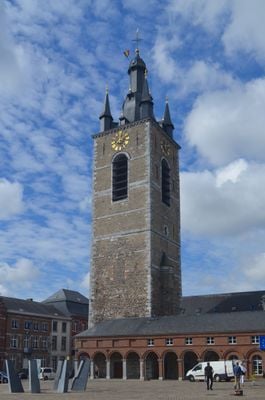
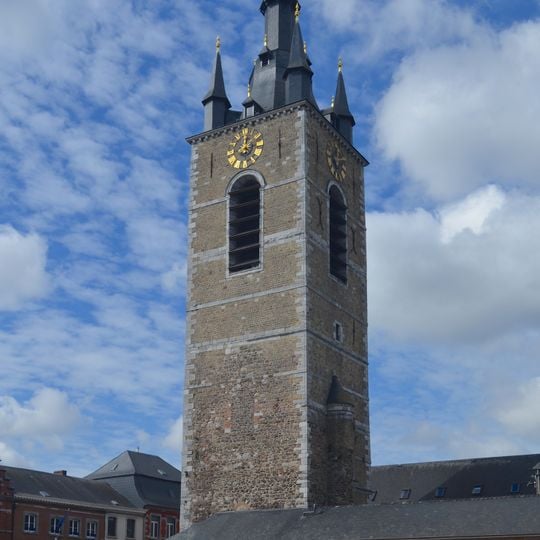
The Belfry of Thuin is a square tower of rubble and sandstone with limestone quoins and horizontal bands, rising 60 metres. Its upper level has four large round-arched louvered openings, and the top is capped by a bell-shaped spire with four polygonal pinnacles. The east face still shows the trace of the roof of the demolished nave.
The tower belonged to the collegiate church of Saint-Théodard, built without foundations on slate rock between 1153 and 1164 under Prince-Bishop Henry II of Leez. It became both a bell tower and a communal tower, the only belfry of the Principality of Liège. The church nave, 20 m long and 18 m wide, was demolished in 1811 to create a dancing square, leaving the tower standing alone.
The belfry represents medieval civic authority and belongs to the UNESCO World Heritage collection of Belfries of Belgium and France. Its presence shows how town communities expressed their independence and prosperity through such structures.
The belfry stands on the Place du Chapitre, where the vanished nave of the collegiate church once extended to its east. A semicircular staircase turret with a slate pepperpot roof against the north face gives access to the second level. The tower is a civic property, not a church building, and its bells still mark the hours and half-hours automatically since 2004.
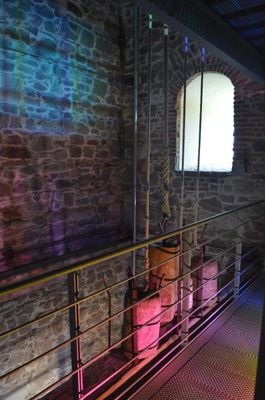
Two bells cast by Pierre Monaux of Givet in 1765 and 1766 still hang in the tower: Paula and Maria. They were recast on the magistrate's initiative after the chapter of the collegiate church refused to share the cost, so the town paid alone.
The community of curious travelers
AroundUs brings together thousands of curated places, local tips, and hidden gems, enriched daily by 94,020 contributors worldwide.