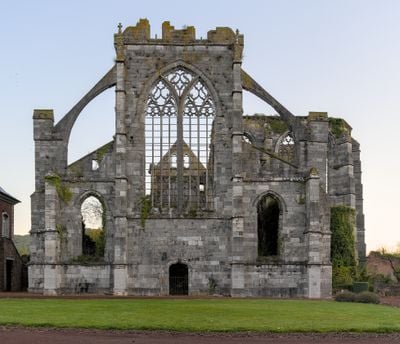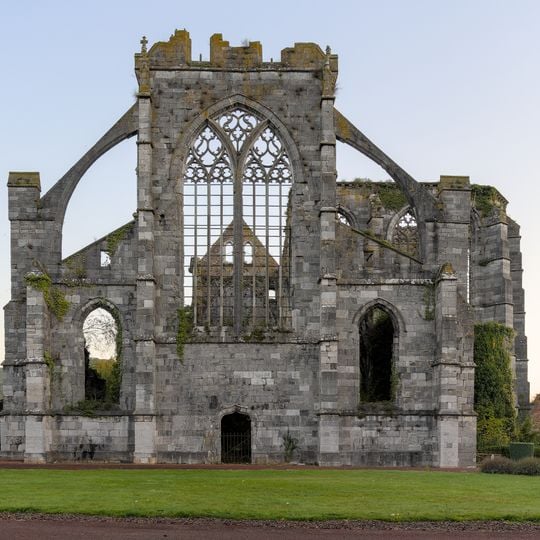
Aulne Abbey, Cistercian monastery ruins in Gozée, Thuin, Belgium
Aulne Abbey is a monastery ruin sitting along the Sambre River, where stone walls and Gothic arches still stand in parts. The remaining structures reveal how the complex was organized, with spaces for prayer, work, and daily living spread across what once was a self-contained community.
The monastery began in 657 as a Benedictine community and shifted to Cistercian rule in 1147. French revolutionary forces destroyed it in 1794, ending over a thousand years of continuous monastic presence.
The name comes from the alder (aulne in French, els in Dutch) that grew on the site. Two refectories suggest some monks followed the strict observance that later produced the Trappists. The Landelies gate, the abbey's only entrance until the 18th century, is where food was given to the poor and a monk received strangers.
The ruins sit at Rue Émile Vandervelde 277 in Thuin right beside the river, making them easy to locate. Booking a guided tour in advance helps you understand the layout and history better during your visit.
The abbey had its own brewery and tannery in the 18th century, when abbot Barthélémy Lovant (1728-1753) had the decayed buildings rebuilt with lavish luxury. The new abbot's residence was the only part spared by the 1794 fire. The Landelies gate tower, the sole entrance until the 18th century, also survives.
The community of curious travelers
AroundUs brings together thousands of curated places, local tips, and hidden gems, enriched daily by 93,838 contributors worldwide.