Cartier Castle, Protected heritage castle in Marchienne-au-Pont, Belgium.
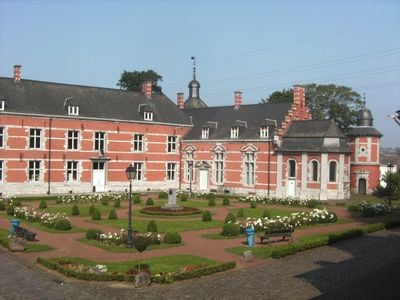
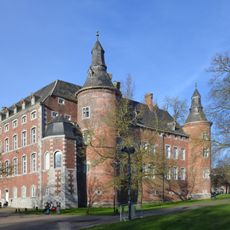
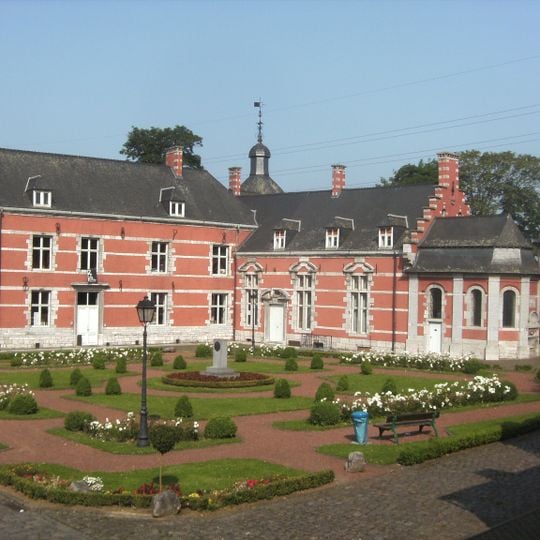
Cartier Castle is a red-brick château with thick bands of light grey stone, stone-framed windows and a steep slate roof with dormers. A narrow dark cupola with a spire and weather vane rises at its centre. A lower brick wing on the right has a round-headed doorway and tall arched windows; on the left facade, a white door with a canopy sits under a plaque bearing the number 8.
A seigneurial manor on this spot was destroyed on 21 July 1554; around 1635 the Honorez family built the castle on land granted in 1593. In 1667, during the War of Devolution, its position under the Prince-Bishopric of Liège kept it neutral, so it served as a hospital for both French and Spanish soldiers. Guillaume Bilquin bought it in 1693 and completed it; his daughter Marie-Agnès married Jean-Louis de Cartier, and the castle passed to the Cartier family in 1725.
The ground floor library bears the name of French writer Marguerite Yourcenar, who visited in 1956 through family ties. The space shows how literary history connects to this location and draws people in.
The castle is reached by the De Cartier metro station, whose entrance was cut through the demolished south wing. The courtyard, with benches, is open to the public as part of the Marchienne-au-Pont municipal park. The ground-floor library and first-floor Walloon administration share the building.
Marguerite Yourcenar's uncle Émile de Cartier de Marchienne, Belgian ambassador to China from 1910 to 1917, had a replica of the family castle built as the legation in Beijing. Plans were drawn at Marchienne-au-Pont and bricks, slates, tiles and panelling shipped from Belgium. The building survives as the Zijin Guest House in the Legation Quarter, though its original entrance is gone.
The community of curious travelers
AroundUs brings together thousands of curated places, local tips, and hidden gems, enriched daily by 94,613 contributors worldwide.