Kasteel van Potegem, Neo-baroque castle in Waregem, Belgium
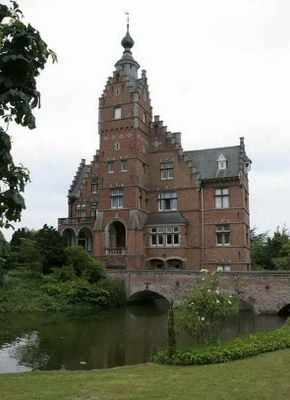
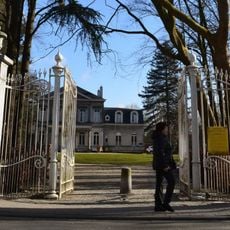
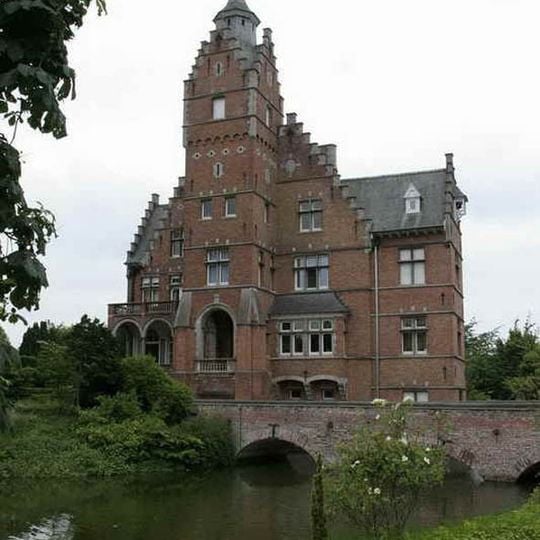
Kasteel van Potegem is a neo-baroque castle in Waregem, its reddish-brown brick facade with pale stone window surrounds rising above a single-arch brick bridge over the Gaverbeek. A steep tower with a stepped, pointed roof and corner pinnacles stands left of centre; the main roof is dark grey with a small dormer. The base has round-arched openings and a projecting entrance block with a balcony.
Potegem is first recorded in 964, when Arnulf I, Count of Flanders, gave land including the castle to the Sint-Pietersabdij of Ghent. Around 1260-1270 it was withdrawn from the abbey's holdings and became a lordship held by the Lords of Potegem. In the 16th century Walter van Potegem, third count of the lordship of Ingelmunster, lived here, and the castle was partly burned by Fernando Álvarez de Toledo in reprisal for his part in resistance against Spanish rule. In 1830 it became a boys' boarding school; after decay, industrialist Robert Vindevogel bought it in 1930 and had architect Viérin restore it in neo-baroque style.
The name Potegem comes from the lordship held by the Heren van Potegem, who ruled this side of the Gaverbeek while the baron of Ingelmunster was lord of Waregem. The Gaverbeek marked the boundary between the kasselrijen of Kortrijk and Oudenaarde after the 14th-century Treaty of Athis-sur-Orge. Walter van Potegem, third count of Ingelmunster, lived here in the 16th century.
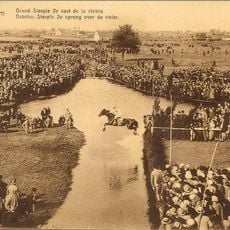
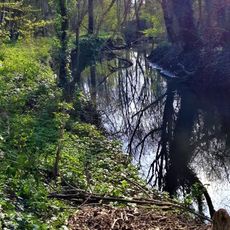
The castle stands in a park in Waregem's centre, along the R35 and opposite the Waregemse Hippodroom, with the Gaverbeek bordering it on two sides. The photo shows a low single-arch brick bridge over the water at the entrance front; the grounds are reached on foot from the surrounding streets.
Walter van Potegem, third count of the lordship of Ingelmunster, lived in the castle in the 16th century; after he joined the revolt against Spanish rule, troops under Fernando Álvarez de Toledo burned part of it in reprisal. The brick tower with its stepped, pointed roof and corner pinnacles dates from the neo-baroque restoration by architect Viérin after industrialist Robert Vindevogel bought the building in 1930.
The community of curious travelers
AroundUs brings together thousands of curated places, local tips, and hidden gems, enriched daily by 94,241 contributors worldwide.