Beguinage of Herentals, Religious complex in Herentals, Belgium.
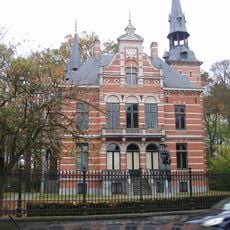
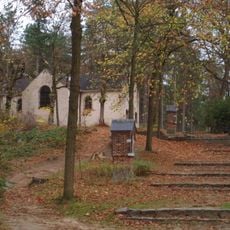
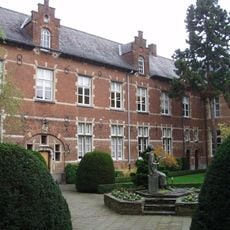
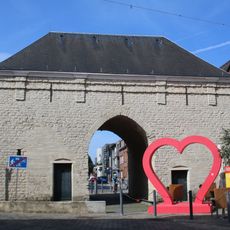
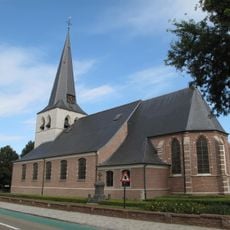
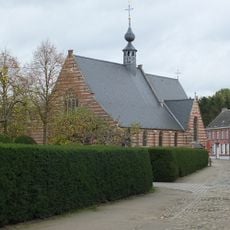
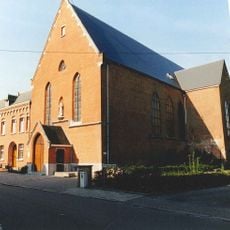
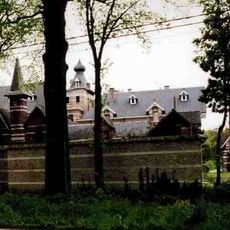
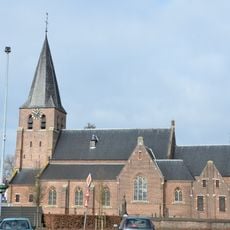
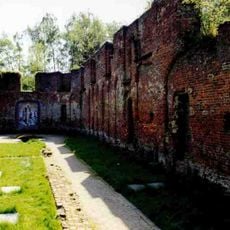
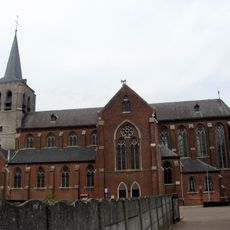
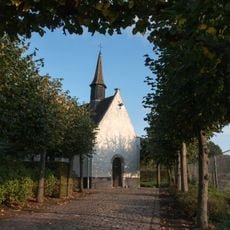
The Beguinage of Herentals occupies a single street with a park and its church. The 1614 church is a pseudo-basilica of brick with alternating horizontal bands of sandstone, a barrel vault, and 17th-century furnishings. Only the south-east row of houses, the dries, the church and two entrance portals of 1640 and 1622 survive; a 17th-century convent and the former infirmary, now a museum with a stepped dormer and baroque door, stand out.
The beguinage was founded in 1266, one of the oldest in the Duchy of Brabant, opposite the old hospital. Calvinists in power had it demolished in 1578 for fear it would aid the Spanish enemy; after the Catholic restoration of 1585 a new beguinage rose slightly to the south, along Burchtstraat, taking shape from 1590. It gained its own church in 1614 and grew to 235 beguines before declining.
The women who lived here chose a religious life without taking permanent vows or surrendering their belongings to a convent. This way of living offered them spiritual devotion combined with personal independence and property ownership.
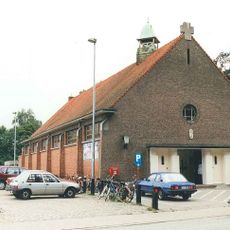
The beguinage is reduced to the slightly curved south-east row of houses along the triangular dries, plus the church and two entrance portals of 1640 and 1622. The infirmary now houses a museum, and its stepped dormer and Baroque door can be seen from the street. A school and senior flats adjoin the site, so access is by the surviving lanes rather than a closed courtyard.
The oldest surviving house is the foundation house of 1647, attached to the school building on the west side. Two entrance portals, dated 1640 and 1622, still mark the entrances to the site. The infirmary, now a museum, has a stepped dormer and a baroque door.
The community of curious travelers
AroundUs brings together thousands of curated places, local tips, and hidden gems, enriched daily by 93,992 contributors worldwide.