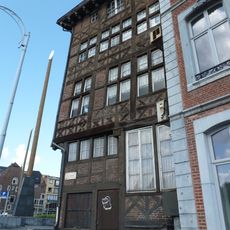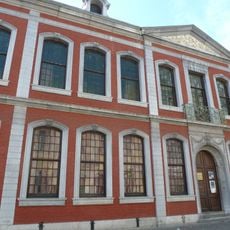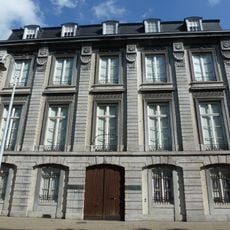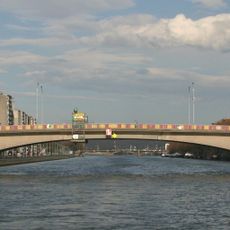
Curtius Palace, Renaissance palace on Meuse riverbank in Liège, Belgium
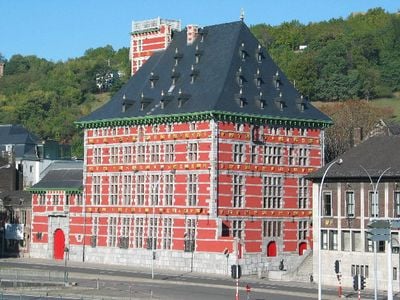
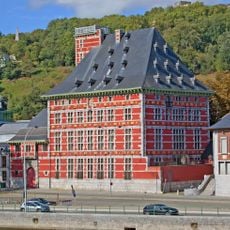
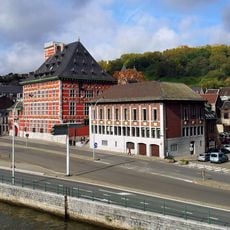
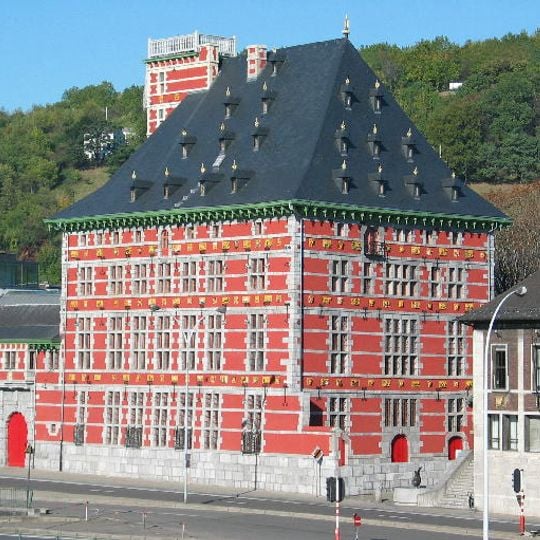
Curtius Palace is a rectangular brick and limestone mansion built between 1600 and 1610, with four facades of four decreasing storeys, cross-windows with stone mullions, and sculpted mascaron reliefs between the window rows. A four-storey tower rises above the central bay of the west facade, topped by a balustraded terrace overlooking the Meuse. The steep slate roof has eleven dormers on the south side and a pinnacle.
Jean De Corte, known by his Latinized name Curtius, built the palace between 1600 and 1610 on land bought from the Saint-Barthélemy collegiate church for 3,000 florins. In 1627 his son Pierre sold it to the mont-de-piété, which divided the property in 1628. The city acquired it in 1901 and opened a museum in 1909 after restoration.
The palace takes its name from Jean de Corte, a weapons merchant who commissioned it centuries ago. Today, visitors walk through rooms filled with regional artwork and everyday objects that show how people lived across different periods.
The palace stands at no. 13 on the quai de Maastricht, in the Féronstrée et Hors-Château district. Entry to the building is through a porch attached to the south part of the side facade; the original entrances were on the east and west sides, reached from the courtyard. The west tower has a balustraded terrace looking over the Meuse and the green hills to the north.
The four facades have four levels of decreasing height, and between the window rows the parapets carry carved tuffeau medallions: human and animal figures, the Curtius family coat of arms, scenes from Greek fables and medieval tales. The metal anchors ending the tie rods are still visible in the walls.
The community of curious travelers
AroundUs brings together thousands of curated places, local tips, and hidden gems, enriched daily by 93,558 contributors worldwide.