Ursuline convent in Liège, Religious convent in Liège, Belgium
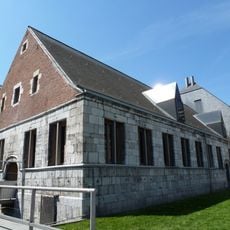
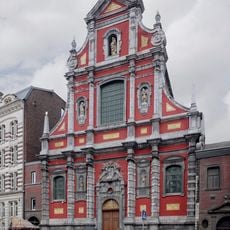
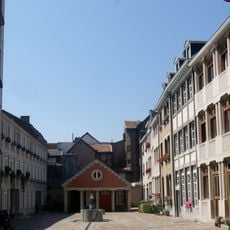
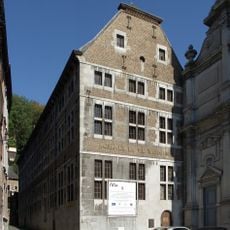
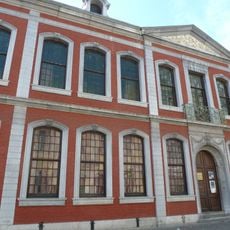
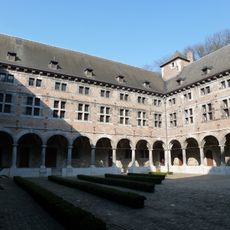
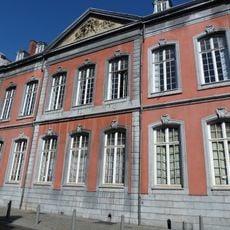
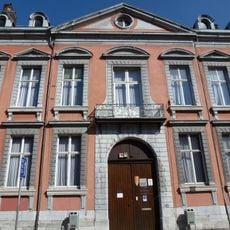
The Ursuline convent in Liège occupies a U-shaped complex of brick and limestone buildings on the impasse des Ursulines, off rue Hors-Château at the foot of the Montagne de Bueren. The right facade carries a stone shield dated 1661. A black railing fronts the lower level, where a glazed door bears the gold lettering "L'AGLAINNI 1853 - 1885".
The site began as a house and brewery built by Gérard Ghyssens in the early 1500s and became a convent in 1627. It served as a religious community for several hundred years before the building was adapted for different uses.
The convent's name comes from the Ursuline sisters, whom Bishop Étienne Strecheus brought to Liège in 1614 to educate girls, since no special schooling for girls existed. Anne Marot led the first community. The sisters moved to the Hors-Château house in 1627 and stayed nearly three centuries. The gold lettering "L'AGLAINNI 1853 - 1885" on the glazed entrance door is a detail to spot.
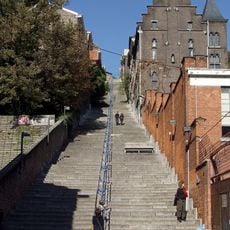
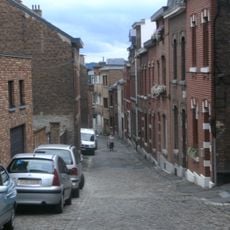
The complex is private and has been renovated since 1996 by Vincent de Lange, so there is no general admission. The Impasse des Ursulines opens off Rue Hors-Château at the foot of the Montagne de Bueren stairs; the buildings and terraced gardens are best seen from this public street and alley.
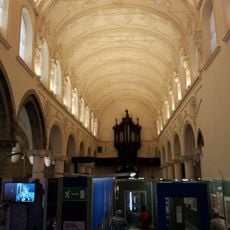
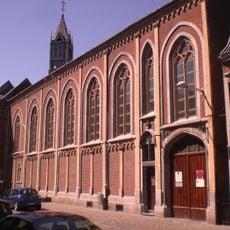
The chapel, financed largely in 1660 by city commissioner Honlet, whose daughter had taken vows there, was sold to the Protestant consistory in 1819. It was demolished in 1925 and replaced by the Protestant temple on quai Marcellis. The altarpiece of the Martyrdom of Saint Ursula was painted by Renier de Lairesse, father of Gérard de Lairesse.
The community of curious travelers
AroundUs brings together thousands of curated places, local tips, and hidden gems, enriched daily by 94,613 contributors worldwide.